No, the controversial US surveillance camera firm has not been deployed by any UK police force; but Britain runs a much larger network of its own, alongside facial recognition vans, a stalled digital ID scheme and a growing list of Palantir contracts. Here is what is real, what isn’t, and what you can do about it.
Searches for “Flock cameras UK” have risen sharply as American reporting on Flock Safety’s automatic licence plate reader network has spread online. The company has become shorthand in the US for a certain kind of mass surveillance: cameras that log every passing vehicle, feed a searchable national database, and have been linked to controversies over data sharing with federal immigration agencies.
None of that infrastructure exists here under that name. There is no confirmed deployment of Flock Safety cameras by any UK police force; the confusion is compounded by the existence of an unrelated UK insurance company also called Flock, and a food business registered as Flock London Ltd. If a claim about “Flock cameras” turning up on a British street is circulating locally, it is worth treating with scepticism until a force confirms it.
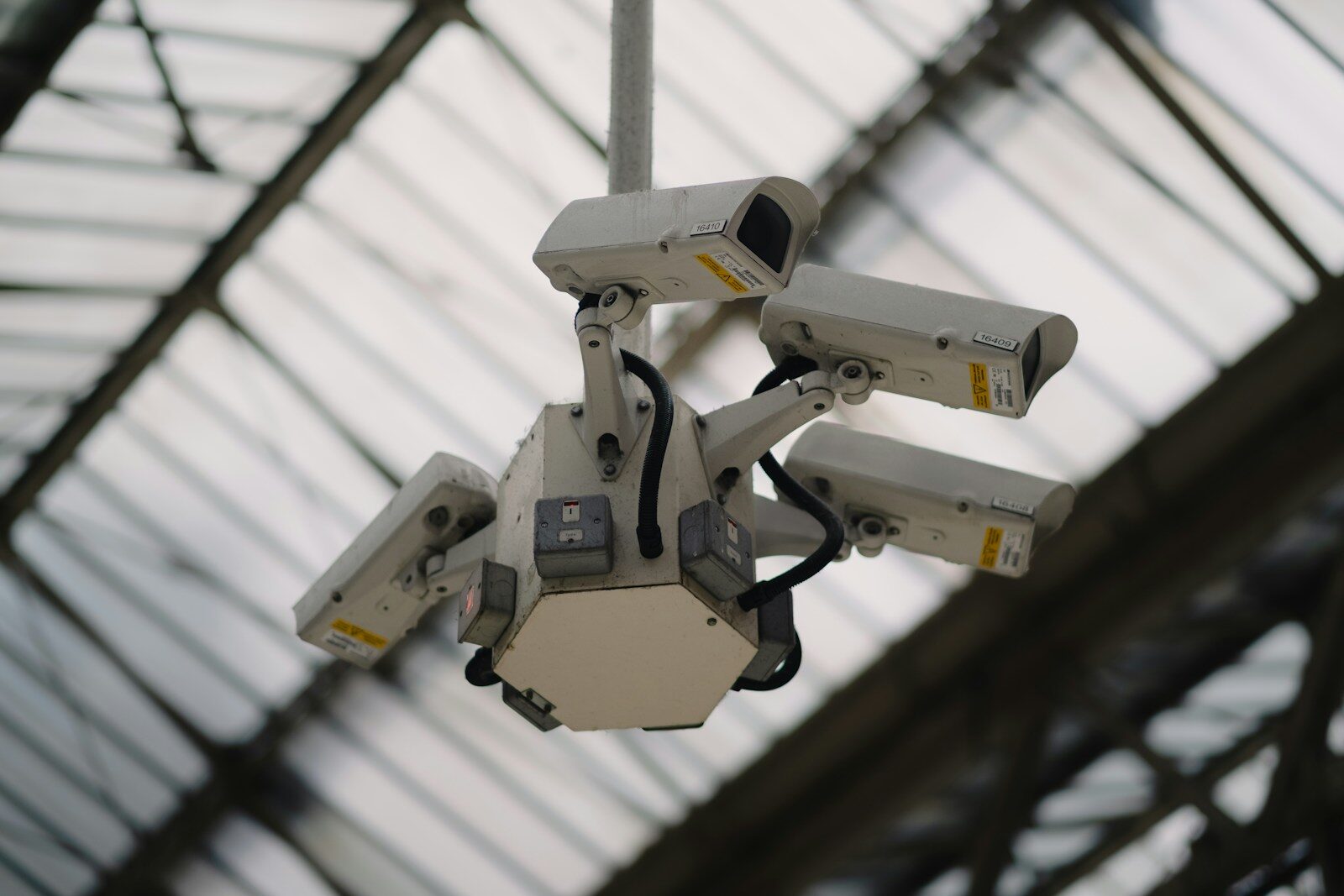
That does not mean UK roads are unwatched. The country runs its own automatic number plate recognition (ANPR) network, run directly by the police rather than a private US vendor, and it is bigger than Flock’s American footprint by several measures.
What is actually reading your number plate
According to the Home Office’s own impact assessment for the National ANPR Service, the network comprises more than 12,000 fixed camera sets and around 1,900 mobile cameras, submitting over 100 million number plate reads to national systems every day. Each read captures the number plate, the time and the location, usually alongside an image of the vehicle.
Separately, local authorities are adding their own ANPR cameras for traffic enforcement rather than criminal justice. Swindon Borough Council, for example, began piloting five ANPR cameras in March 2026, initially to catch speeding drivers and issue warning letters, with plans to later check insurance, tax and MOT status.
Facial recognition is the faster-growing story
While ANPR reads number plates, a separate and expanding technology reads faces. Live facial recognition (LFR) is used by 13 of the 43 police forces in England and Wales as of March 2026, according to the Parliamentary Office of Science and Technology, with a national rollout planned. Cameras compare passers-by against a watchlist of people wanted by police or the courts; if there is no match, images are automatically deleted, according to the same briefing.
The scale has grown quickly. Human rights group Liberty reports that the Metropolitan Police has doubled its weekly LFR deployments across London in the year to July 2026, and that the UK’s first permanent, fixed facial recognition cameras went live in Croydon in October 2025. The Met has said it plans to install further static cameras in the West End and Soho by the end of 2026. Reporting citing Metropolitan Police figures put the force’s 2026 face-scan total above 1.7 million, roughly 87% higher than the same period the previous year.
Police forces argue the technology delivers results; the Met’s LFR lead pointed to 173 arrests across 24 deployments between October 2025 and March 2026 in one trial, including people wanted for sexual offences and a 2004 assault case. Critics, including Liberty and Big Brother Watch, argue deployment is outpacing regulation; there is no dedicated statute governing LFR use, and oversight is currently split between the Information Commissioner’s Office and the Equality and Human Rights Commission.
Digital ID: announced, scaled back, then shelved
A second thread of the surveillance debate concerns identity verification rather than cameras. In September 2025, then-Prime Minister Keir Starmer announced a national digital ID scheme, branded BritCard, intended to be mandatory for right-to-work checks by 2029. Nearly three million people signed a parliamentary petition opposing it.
The government backtracked in January 2026, confirming that a government-issued digital ID would not be made mandatory for British citizens, including for right-to-work checks, though ministers said digital right-to-work checks themselves would remain compulsory through other means, such as existing eVisa and passport-based verification. A consultation on the wider scheme ran until May 2026.
Since then, UK politics has moved further. Keir Starmer resigned as Prime Minister in June 2026 and was succeeded by Andy Burnham, who took office on 20 July 2026. According to fact-checking service Full Fact, Burnham confirmed shortly before taking office that his government would not proceed with the digital ID scheme at all, though he has indicated he intends to continue with a separate rollout of digital driving licences. Whether those licences will be accepted for right-to-work checks has not yet been confirmed.
For now, there is no mandatory national ID card or app in the UK, digital or physical. Existing checks, such as eVisa share codes for migrants and passport or driving licence checks for British and Irish citizens, remain the operative system.
Palantir: where it sits in UK public data
Palantir Technologies, the US data analytics firm, has become the most cited example of private-sector involvement in UK state data systems, though its work is distinct from both ANPR and facial recognition.
Its largest UK contract is the NHS Federated Data Platform, a system for centralising and analysing NHS datasets, awarded in 2023 and valued at £330 million. An investigation by The Nerve, published in January 2026, identified at least 34 current and past state contracts held by Palantir across at least ten government departments, local councils and police authorities, with a combined value of at least £670 million. These include a December 2025 Ministry of Defence deal worth £240 million, awarded without competitive tender, and a £9 million contract, confirmed in mid-2026, to build a new national firearms licensing database covering roughly two million registered firearms across all 43 police forces in England and Wales.
Palantir’s push into frontline UK policing has been more contested. A proposed £50 million, two-year contract to supply the Metropolitan Police with AI tools for administrative tasks and evidence analysis was blocked; Palantir is challenging that decision. A cross-party group of MPs on the Health and Social Care Committee has separately urged ministers to use a break clause available in February 2027 to reconsider the NHS contract, following disputed claims over whether Palantir has held access to identifiable patient data while building the platform; the company’s UK head has disputed that characterisation, though the parliamentary committee’s report notes the company’s public statements on the point have not been consistent. NHS data cited in that report also suggests uptake has been mixed. Fewer than a quarter of England’s 215 hospital trusts were actively using the Federated Data Platform by the end of 2024, and at least two trusts have told NHS England in writing that parts of the system offer less functionality than the tools they already had.
Palantir’s role is data analysis and infrastructure, not camera hardware. It does not itself operate ANPR cameras or facial recognition vans in the UK; its contracts concern how data already collected by public bodies is stored, linked and queried.
What you can actually do
There is no way to opt out of ANPR reads on public roads; the network operates under police data protection impact assessments rather than individual consent, and it is expressly out of scope of Flock-specific privacy tools built for the US market, because Flock does not operate ANPR cameras here.
There are, however, established rights that apply to identifiable personal data collected by cameras of any kind, including ANPR and facial recognition. Both the police and other public bodies must comply with UK GDPR and the Data Protection Act 2018 when processing footage or camera data that can identify an individual, according to Information Commissioner’s Office guidance, which explicitly covers CCTV, ANPR, body-worn video, drones and facial recognition systems.
Practical steps for anyone wanting to know what is held on them:
- Submit a Subject Access Request (SAR). Anyone can ask a police force, local authority or other public body whether it holds personal data about them and request a copy, under UK GDPR. Organisations must normally respond within one month, extendable to three for complex requests, according to ICO guidance. Requests can be made in writing, by email, or in some cases verbally; no specific form of words or legal reference is required.
- Know the exemptions. Police and other bodies can withhold information if disclosure would prejudice an active investigation, identify third parties, or fall under other statutory exemptions, so a SAR will not always return a complete picture.
- Go to the right body for the right database. Data held on the Police National Computer is handled separately by ACRO Criminal Records Office rather than individual forces; other force-held records go through each force’s own data protection team.
- Complain to the ICO if a response is inadequate or overdue. The regulator can investigate complaints about how public bodies have handled SARs and broader surveillance data practices.
- Watch the ICO’s video surveillance guidance, which is currently under review following the Data (Use and Access) Act 2025 and may change the practical detail of these rights over the coming months.
None of these routes will remove a vehicle from the ANPR network or a face from a facial recognition watchlist search in real time; the legal architecture for that does not currently exist. What they offer is visibility: a way to establish what has been recorded, by whom, and, where the law allows, why.