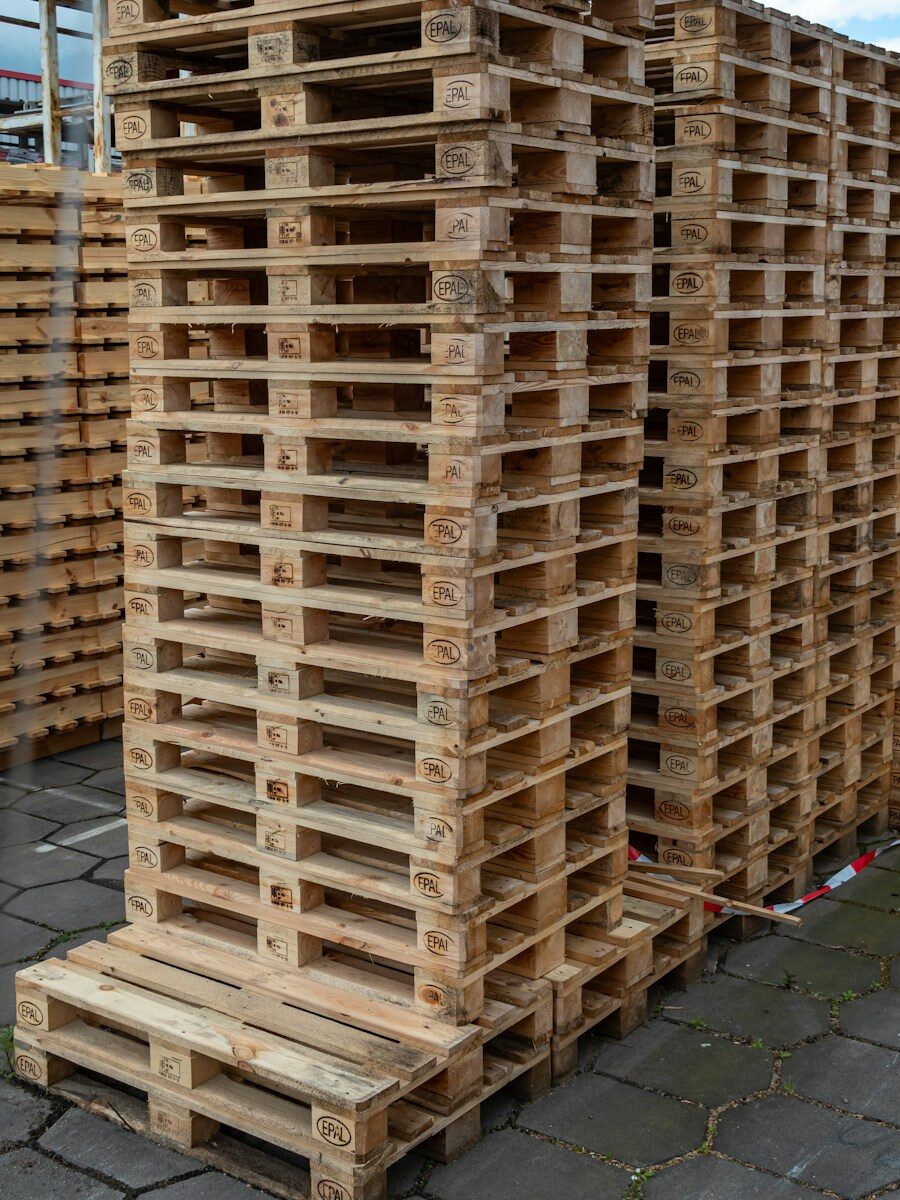
A man was pulled from a student protest in central London by police officers on 20 November 2026 after apparently being mistaken for a supporter of the banned organisation Palestine Action. The reason for the apparent confusion was his T-shirt, which read “Palletsign Acton”, accompanied by an illustration of a wooden pallet.
Footage of the incident has circulated widely online, with viewers questioning why police intervened over a slogan that did not actually name Palestine Action.
The footage establishes that officers removed the man from the demonstration, but it has not been independently confirmed whether he was formally arrested, charged or subsequently released without charge. Nor has the Metropolitan Police publicly confirmed the specific grounds for its intervention in the material reviewed by Mill.
The incident has renewed criticism of the government’s controversial decision to proscribe Palestine Action under terrorism legislation.
The group was banned in July 2025 alongside two neo-Nazi organisations, Maniacs Murder Cult and the Russian Imperial Movement. The decision has since been challenged in the courts, with Amnesty International, Liberty, English PEN and other human rights organisations raising concerns about freedom of expression.
The Supreme Court heard the latest appeal against the ban on 4 and 5 November 2026. Its judgment is still awaited.
What happened to the man wearing the ‘Palletsign Acton’ T-shirt?
The incident took place on Friday 20 November during a student demonstration in central London.
Students had gathered as part of an international day of action addressing issues including education funding, living costs, war and militarisation.
According to reporting by the Evening Standard, approximately 300 people joined the student protest, with pro-Palestinian campaigners among those attending.
The demonstration also attracted a counter-protest, with police separating opposing groups around Whitehall.
During the protest, officers were filmed taking hold of a man wearing a white T-shirt and removing him from the crowd.
The shirt appeared to reproduce the visual style of Palestine Action protest clothing, but its wording was different.
It read “Palletsign Acton”, accompanied by imagery associated with wooden pallets. Acton is also the name of an area of west London.
On 21 November, Al Jazeera published the footage, reporting that officers appeared to have mistaken the slogan for the name of Palestine Action.
The incident was also reported by the independent website Skwawkbox, which described the intervention as an arrest.
However, the man’s identity, the precise legal grounds for his removal and any subsequent police action have not been independently established.
The Metropolitan Police confirmed that ten people were arrested during demonstrations in central London that day.
In a statement reported by the Evening Standard, the force said the arrests related to alleged offences including common assault, assaults on emergency workers and breaches of the Public Order Act.
That statement did not identify the man wearing the T-shirt or confirm that he was among those arrested.
It is therefore possible to establish that police physically removed him from the demonstration, but not that he was charged with a terrorism offence.
Source: Evening Standard reporting, 20 November 2026.
Why would police intervene over a T-shirt?
The explanation lies in the legal consequences of Palestine Action’s proscription.
On 5 July 2025, Palestine Action became a proscribed organisation under the Terrorism Act 2000.
Proscription creates criminal offences associated with membership, certain expressions of support, fundraising and displaying clothing or articles connected with a banned organisation.
Section 13 of the Terrorism Act specifically concerns the wearing or display of clothing and other articles in public.
An offence can arise where the circumstances create reasonable suspicion that the person is a member or supporter of a proscribed organisation.
This means police do not necessarily have to establish that someone is actually a member of an organisation before investigating a potentially unlawful display.
However, the legal test requires more than an officer simply disliking a political message.
Whether clothing gives rise to reasonable suspicion depends on its appearance and the surrounding circumstances.
A T-shirt displaying a parody slogan does not automatically establish support for a banned organisation.
The wording, design, context and conduct of the person wearing it may all be relevant.
In the latest incident, the words on the man’s shirt did not actually say Palestine Action.
Whether police genuinely misread the slogan, interpreted it as deliberate support for the banned organisation, or acted for some other reason remains unconfirmed.
Source: Terrorism Act 2000, Section 13.
Has something like this happened before?
Yes.
In August 2025, police were filmed speaking to demonstrators wearing T-shirts bearing the words “Plasticine Action”.
The shirts included an image of Morph, the familiar stop-motion television character, alongside a slogan opposing AI-generated animation.
The design appeared to parody the visual style of Palestine Action merchandise.
One man wearing a similar shirt in London was reportedly arrested and subsequently de-arrested after police established what the wording actually said.
At another demonstration in Glasgow, Police Scotland officers spoke to a man wearing a Plasticine Action shirt.
Police Scotland later confirmed that no arrests had been made.
The incidents attracted attention because the police were apparently required to distinguish between references to a banned organisation and jokes deliberately resembling its name.
Sky News reported on the Glasgow incident on 19 August 2025.
The latest Palletsign Acton incident raises a similar question about how police interpret political slogans and visual satire.
It also demonstrates how the consequences of proscription can extend beyond people directly expressing support for a banned organisation.
Why was Palestine Action banned in the first place?
Palestine Action was established in 2020 and became known for direct-action protests targeting businesses associated with Israel’s arms industry.
Its activities included occupying buildings, damaging equipment and disrupting operations at facilities linked to military manufacturing.
The group’s stated objective was to interfere with the production and supply of weapons connected to Israel.
In June 2025, activists entered RAF Brize Norton in Oxfordshire and damaged military aircraft using paint.
The incident prompted renewed government attention to the organisation.
Then-Home Secretary Yvette Cooper announced plans to proscribe Palestine Action, arguing that the group’s activities had crossed the legal threshold for terrorism.
The Home Office also cited earlier incidents involving defence businesses.
These included an attack on a Thales facility in Glasgow, which the government said caused more than £1 million in damage and involved pyrotechnics and smoke bombs.
The government argued that Palestine Action’s activities had become increasingly serious and posed risks to public safety and national security.
Its position was that the organisation had moved beyond lawful protest into conduct covered by the Terrorism Act.
The legal controversy concerns whether those activities justified banning the organisation in its entirety, rather than prosecuting individuals responsible for criminal offences.
That distinction has become central to the judicial challenge and the wider debate over protest rights.
Source: Home Office announcement, 1 July 2025.
Was Palestine Action really banned alongside a neo-Nazi murder cult?
Yes. This is confirmed by the government’s own legislation.
The Terrorism Act 2000 (Proscribed Organisations) (Amendment) Order 2025 added three organisations to the UK’s list of banned terrorist groups:
- Palestine Action
- Maniacs Murder Cult
- Russian Imperial Movement
Maniacs Murder Cult is a transnational neo-Nazi organisation associated with the promotion of extreme violence.
The Home Office describes it as a white supremacist group whose members and supporters have claimed responsibility for violent attacks and circulated material intended to encourage further violence.
The Russian Imperial Movement is a white supremacist, ultranationalist organisation with a paramilitary wing involved in Russia’s war against Ukraine.
Its activities have included paramilitary training.
Palestine Action, by comparison, was a direct-action campaign targeting military facilities and businesses connected with the arms trade.
The three groups have different ideologies, objectives and histories.
They were nevertheless placed in the same statutory instrument, meaning Parliament was asked to approve their proscription together.
The decision proved controversial.
During the House of Commons debate on 2 July 2025, Green Party MP Carla Denyer objected to the arrangement.
After MPs voted by 385 to 26 to approve the order, she argued that members opposed to banning Palestine Action had been prevented from voting separately in favour of proscribing the two neo-Nazi groups.
Denyer asked whether future orders concerning unrelated organisations could be considered individually.
The Deputy Speaker explained that the parliamentary chair did not have the power to separate the decisions contained within a statutory instrument.
The government maintained that all three organisations independently satisfied the legal criteria for proscription.
Being included in the same order does not mean the organisations were identical in their activities or posed equivalent threats.
Nevertheless, the arrangement required MPs to take a single position on three substantially different organisations.
That procedural decision remains a legitimate subject of scrutiny, particularly given the subsequent legal challenge to Palestine Action’s inclusion.
Sources: The 2025 Proscription Order; House of Commons debate, 2 July 2025.
Why is the Palestine Action ban considered controversial?
The central dispute concerns the boundary between serious criminal activity and terrorism.
British terrorism legislation contains a broad definition extending beyond violence against people.
Under certain circumstances, serious damage to property can constitute terrorism where it is connected with the relevant political, religious, racial or ideological purposes and the other statutory conditions are satisfied.
This means conduct that might ordinarily be described as criminal damage can also fall within terrorism legislation.
The government argues that Palestine Action’s activities met the statutory definition and that proscription was justified by their seriousness, organisation and escalation.
Critics argue that the existing criminal law already provides substantial powers to investigate and prosecute property damage, trespass and violent conduct.
They question whether those offences justify imposing terrorism-related restrictions on an entire political campaign, including people who engage only in peaceful expression.
The distinction matters because proscription has consequences extending far beyond prosecutions for individual acts of damage.
It also restricts participation in, and certain expressions of support for, the organisation.
That is why the lawfulness of the decision has been disputed by civil liberties organisations, human rights lawyers and campaigners.
What has Amnesty International said?
Amnesty International UK has repeatedly criticised the proscription of Palestine Action.
The human rights organisation argues that the ban represents a disproportionate interference with peaceful protest and freedom of expression.
Amnesty intervened in the legal proceedings alongside Liberty and has called for the decision to be reversed.
On 4 November 2026, as the Supreme Court heard the appeal, Tom Southerden, Amnesty International UK’s Law and Human Rights Director, criticised the continued arrests of demonstrators displaying support for Palestine Action.
He described the situation as a consequence of the government’s misuse of counter-terrorism powers.
Amnesty’s position is that peaceful expression should not attract criminal penalties merely because it concerns an organisation engaged in controversial political activity.
The organisation has also emphasised the chilling effect of arrests on people who might otherwise participate in lawful demonstrations.
Readers can examine Amnesty’s arguments directly in its November 2026 statement and its written intervention in the Supreme Court proceedings.
What does the Good Law Project say about Palestine Action?
The Good Law Project has published criticism of the government’s use of terrorism legislation against Palestine Action.
In September 2025, human rights lawyer Martha Spurrier wrote an article for the organisation questioning the expansion of counter-terrorism powers into the regulation of direct-action protest.
Spurrier argued that the use of proscription against a campaign associated principally with property damage represented a major departure from assurances given when the Terrorism Act was introduced.
She drew comparisons with earlier environmental campaigns, including direct action undertaken by Greenpeace.
Her argument was that damage to property can be prosecuted through ordinary criminal law without necessarily requiring the additional consequences associated with terrorism offences.
She also questioned whether broad counter-terrorism powers could discourage legitimate political expression, particularly where people cannot easily predict how police will interpret slogans and other protest material.
The arguments were published as commentary rather than a court judgment.
They are nevertheless relevant to the latest T-shirt incident because they concern the same practical question: how far should the legal consequences of proscription extend into ordinary political expression?
The full article is available from the Good Law Project: Martha Spurrier on the Proscription of Palestine Action.
The organisation has also published a separate account discussing the effects of the ban on protest rights.
What have Liberty and free speech organisations said?
Liberty, the British civil liberties organisation, has participated in the legal challenge at the High Court, Court of Appeal and Supreme Court.
In a statement published on 4 November, Liberty director Akiko Hart criticised the breadth of Britain’s definition of terrorism.
The organisation warned that the case could establish an important precedent for the use of terrorism legislation against other protest movements.
Liberty also argued that uncertainty over the scope of criminal offences could discourage people from exercising their right to protest.
Its submissions focus on proportionality, freedom of expression and freedom of association.
Liberty’s full statement and legal submissions are publicly available.
English PEN and PEN International have raised a related concern about the effect of proscription on journalism, academic research, literature and political commentary.
Their intervention in the Supreme Court asks judges to consider the rights of writers and the public to examine and discuss controversial organisations.
The groups argue that a ban should not make an organisation effectively impossible to scrutinise through legitimate public debate.
English PEN published its intervention on 4 November.
These organisations do not all make identical arguments, but they share concerns about the wider consequences of applying terrorism legislation to political speech and protest.
What have the courts decided about Palestine Action?
The legality of the ban has already been considered by two levels of the British court system.
In February 2026, the High Court ruled that the decision to proscribe Palestine Action was unlawful.
The judges found that the Home Secretary had not properly applied the government’s own proscription policy and that the ban disproportionately interfered with rights protected by Articles 10 and 11 of the European Convention on Human Rights.
Those articles concern freedom of expression and freedom of assembly and association.
The High Court also considered the availability of ordinary criminal offences for dealing with the group’s unlawful activities.
However, the government appealed.
On 15 June 2026, the Court of Appeal overturned the High Court’s ruling.
The appeal judges concluded that the Home Secretary had acted lawfully and that proscription was a proportionate response to Palestine Action’s activities.
They placed greater weight on evidence concerning serious property damage, the use of weapons, risks to public safety and the escalation of the group’s campaign.
The judgment also recognised the effect of proscription on peaceful demonstrators, but concluded that the government’s national security arguments justified the restrictions.
The case subsequently reached the Supreme Court.
On 4 and 5 November 2026, the court heard arguments concerning whether the ban is compatible with the rights to freedom of expression and association.
As of 22 November 2026, the Supreme Court has not delivered its judgment.
The proscription therefore remains in force.
The official case, including the legal arguments and recordings of the public hearings, can be accessed through the UK Supreme Court’s case page.
Is it illegal to support Palestine or criticise the ban?
Supporting Palestinian rights, criticising Israel’s government, opposing the war in Gaza or arguing that Palestine Action should be removed from the proscribed list are not, by themselves, criminal offences.
The government has explicitly stated that the ban does not prevent lawful demonstrations concerning Palestine.
However, the Terrorism Act creates separate offences concerning support for proscribed organisations.
The distinction between criticising a ban and expressing support for the organisation subject to it can become legally significant.
The exact wording and circumstances of a statement may matter.
The law also distinguishes between various offences.
Membership and certain forms of inviting or expressing support can carry substantially higher maximum sentences than the specific offence concerning clothing or displayed articles under Section 13.
Consequently, claims that wearing any controversial T-shirt automatically exposes someone to 14 years in prison are misleading.
The legal provision involved and the actual alleged conduct must be established.
For the man wearing the Palletsign Acton shirt, there is currently no public confirmation that he was charged under any of these provisions.
What does the ‘Palletsign Acton’ incident reveal?
The footage has become a striking example of the difficulties involved in policing political expression under terrorism legislation.
A man’s T-shirt apparently resembled the name of a banned organisation closely enough to prompt police intervention.
Yet the words on the clothing referred to pallets and Acton, rather than explicitly naming Palestine Action.
The incident is particularly notable because similar confusion occurred during the Plasticine Action protests in 2025.
Whether the latest intervention resulted from a genuine misunderstanding, an assessment of the design’s intended meaning or another policing concern has not been established.
But the wider issue is clear.
When the display of clothing can itself constitute a terrorism-related offence, decisions about slogans, symbols and apparent meaning become matters for police investigation.
The government considers those powers necessary to prevent support for organisations involved in terrorism.
Amnesty International, Liberty, the Good Law Project’s contributors and other critics argue that their use against peaceful expression risks undermining fundamental civil liberties.
Those competing positions are now before the Supreme Court.
A judgment may clarify whether the restrictions imposed by Palestine Action’s proscription are proportionate under human rights law.
In the meantime, the government has confirmed that the ban remains in force.
The man wearing the Palletsign Acton shirt has brought the practical consequences of that legal dispute into unusually sharp focus.
His experience raises a question that extends well beyond Palestine Action: how should a democracy distinguish between criminal conduct, political sympathy, criticism and satire when enforcing laws intended to prevent terrorism?
The Supreme Court’s pending decision may help establish where that boundary should be drawn.
Sources
- Al Jazeera: UK police drag man from protest over ‘Pallet Sign Acton’ shirt, 21 November 2026.
- Skwawkbox: Police intervention involving ‘Palletsign Acton’ shirt, 21 November 2026.
- Evening Standard/Press Association: Ten arrests during London demonstrations, 20 November 2026.
- Terrorism Act 2000, Section 13. Statutory provisions concerning clothing and displayed articles.
- Home Office: Three groups to be proscribed, 1 July 2025.
- Terrorism Act 2000 (Proscribed Organisations) (Amendment) Order 2025.
- House of Commons Hansard: Debate and vote on the proscription order, 2 July 2025.
- Sky News: Plasticine Action T-shirt incidents, 19 August 2025.
- Amnesty International UK: Response to arrests outside the Supreme Court, 4 November 2026.
- Liberty: Supreme Court intervention on Palestine Action, 4 November 2026.
- Good Law Project: Martha Spurrier on the Palestine Action ban, 8 September 2025.
- English PEN: Intervention in the Supreme Court appeal, 4 November 2026.
- UK Supreme Court: R (Ammori) v Secretary of State for the Home Department. Official case record and status.
- The Guardian: UN warns against misuse of security laws, 19 November 2026.