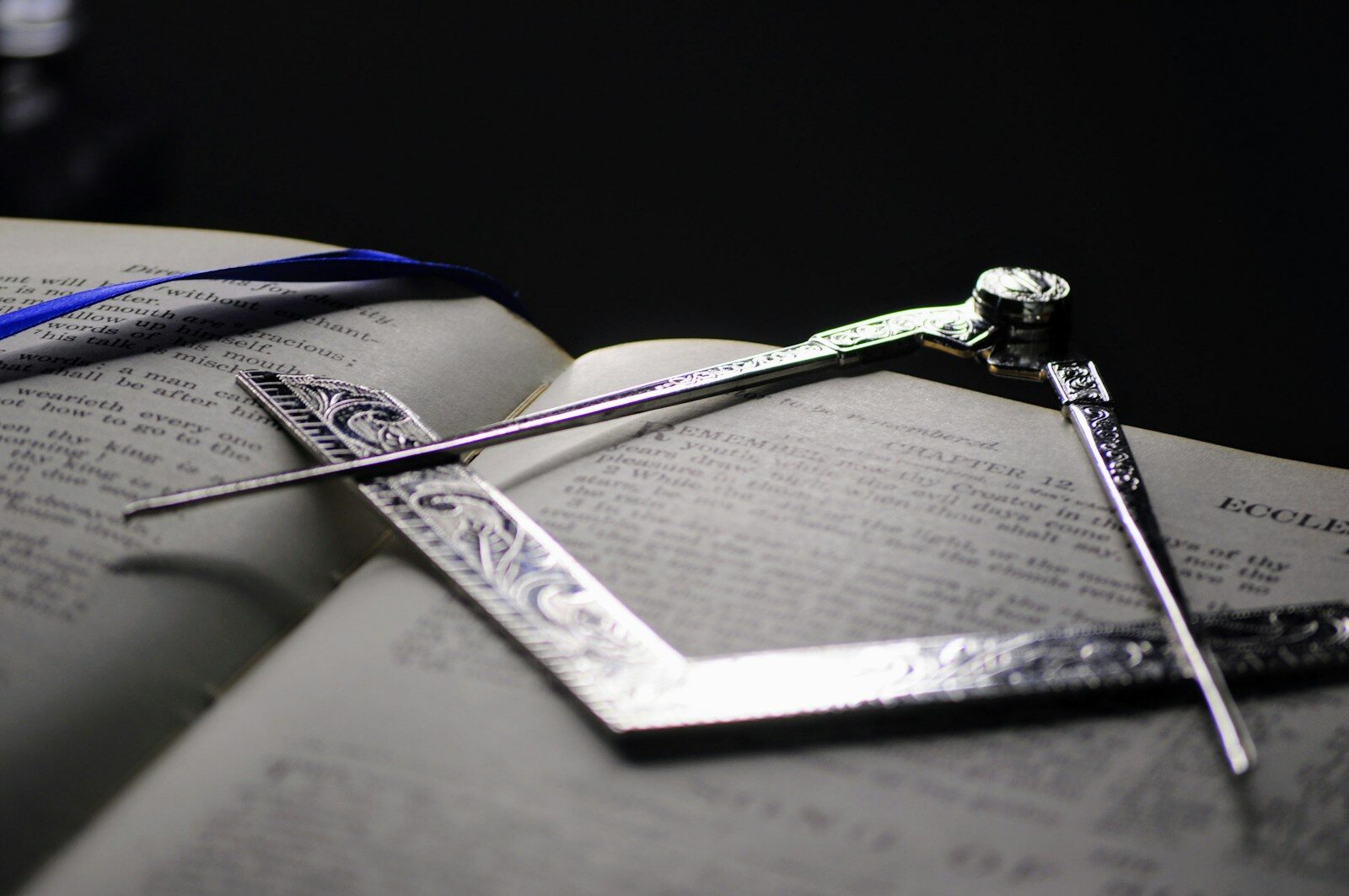
Freemasonry has been described as a declining institution for decades. Its membership has fallen substantially from its twentieth-century peak, its members are getting older, and recent efforts to attract younger recruits through social media have prompted renewed speculation about the organisation’s future. But the figures tell a considerably more complicated story than headlines about collapsing membership might suggest.
The United Grand Lodge of England (UGLE), which governs most mainstream Freemasonry in England and Wales, has approximately 170,000 members today, compared with an estimated peak approaching 500,000 during the middle of the twentieth century.
Yet the organisation’s more recent figures indicate that its annual membership decline has slowed considerably. Membership enquiries increased by 50 per cent between 2020 and 2021, its university lodges now have more than 3,400 subscribing members, and recent reporting indicates that nearly half of new recruits are under 40.
The most recent confirmed annual rate published in the sources examined for this article showed membership declining by less than one per cent in 2024, compared with approximately four per cent in 2021.
Freemasonry is still losing members overall, but there is credible evidence of renewed interest, younger recruits and improving membership retention.
There are also significant historical problems with comparing its present membership against the enormous numbers associated with Britain’s traditional social and fraternal organisations.
The development of the welfare state, changes in social life and the declining importance of private mutual-aid networks have fundamentally altered why people join organisations of this kind.
And while some recent coverage has portrayed Freemasonry’s use of Facebook advertisements as evidence of desperation, advertising through contemporary communication channels is now a routine part of operating almost any membership organisation.
How many Freemasons are there in Britain today?
The United Grand Lodge of England currently describes itself as an organisation of approximately 170,000 members, meeting in more than 7,000 lodges across its jurisdiction, including overseas districts.
The figure represents a major reduction from the organisation’s postwar peak.
An August 2026 Financial Times investigation reported membership of around 175,000, compared with nearly 500,000 in the mid-twentieth century.
Those figures are broadly consistent with the longer-term trend. The precise total depends on the reporting period and which Masonic jurisdictions are included.
Freemasonry also operates through separate organisations, including the Grand Lodge of Scotland, the Grand Lodge of Ireland and two principal women’s Grand Lodges in Britain. Figures for UGLE should therefore not automatically be treated as covering every Freemason in the United Kingdom.
The decline itself is beyond serious dispute.
What requires greater scrutiny is what those numbers actually demonstrate.
A substantial reduction from a historical peak establishes that an organisation is smaller than it once was. It does not, by itself, establish that the organisation is approaching extinction, that public interest has disappeared or that its current recruitment efforts are failing.
Those questions require more recent evidence.
The latest membership figures are considerably more encouraging
In March 2025, UGLE Pro Grand Master Jonathan Spence gave members an update on the organisation’s seven-year strategy to reverse its declining membership.
The figures showed a marked improvement.
Membership had fallen by approximately four per cent in 2021 and more than two per cent in 2022. By the end of 2024, according to figures available to UGLE in February 2025, the annual decline had slowed to less than one per cent.
That represents a substantial reduction in the rate at which membership was falling.
Spence described the organisation as making progress towards its membership objectives, while acknowledging that considerable work remained.
The figures were published in UGLE’s March 2025 Quarterly Communication.
A membership decline of less than one per cent remains a decline. Freemasonry had not yet demonstrated sustained net growth across its entire English jurisdiction.
However, an organisation losing members at a progressively slower rate presents a materially different picture from one experiencing an accelerating collapse.
The distinction becomes more important when considering the number of people showing an interest in joining.
Membership enquiries rose by 50 per cent
In October 2022, UGLE published figures showing that membership enquiries had risen from approximately 12,000 in 2020 to 18,000 in 2021.
That was an increase of 50 per cent.
The organisation also reported increased traffic to its website, alongside a waiting list of approximately 6,000 prospective members.
A digital marketing campaign subsequently generated more than 8,800 enquiries in less than three months, according to UGLE’s announcement.
The figures were included in the organisation’s 2022 membership enquiries report.
There are limitations to what this demonstrates.
An enquiry is not a new member. Someone requesting information might eventually join, decide against membership or simply be curious about the organisation.
The figures also followed a period in which the pandemic had seriously disrupted in-person activities, making changes in interest and recruitment difficult to interpret without further evidence.
Nor should an increase recorded in 2021 be described as proof that enquiries are continuing to increase in 2026.
Nevertheless, these were genuine recorded expressions of interest, rather than projections or statements of ambition.
They demonstrate that a considerable number of people were actively seeking information about joining an organisation frequently portrayed as struggling to attract anybody new.
Freemasonry’s recent publicity campaigns may well have contributed to that interest. That is precisely what publicity campaigns are intended to achieve.
Young people are joining Freemasonry
One of the most persistent assumptions about Freemasonry is that it consists almost entirely of older men, with little appeal to younger generations.
Its membership is certainly older on average than that of many modern organisations. UGLE itself acknowledges the demographic challenge.
But younger people are joining.
The Financial Times reported in August 2026 that approximately 47 per cent of new joiners were under the age of 40.
That statistic deserves particular attention.
It does not mean that 47 per cent of existing Freemasons are under 40. The organisation’s total membership still reflects many decades of recruitment, including substantial numbers of older members.
But it indicates that younger adults account for a significant proportion of the people currently entering the organisation.
UGLE has also developed a dedicated Universities Scheme, established in 2005, to make Freemasonry more accessible to students, university staff and alumni.
According to the organisation’s current Universities Scheme information, 87 participating lodges have more than 3,400 subscribing members.
The scheme allows eligible students to join from the age of 18 and encourages connections between university communities and existing lodges.
It also provides opportunities for members to continue their involvement after graduating.
Freemasonry’s attempts to reach younger audiences are therefore accompanied by actual membership programmes, established local organisations and documented younger recruits.
Those developments are difficult to reconcile with the suggestion that the organisation has entirely lost its ability to attract new generations.
Why historical membership figures can be misleading
One of the biggest problems with discussions of declining membership is the tendency to compare today’s figures with those from a fundamentally different society.
Britain in 1900, 1920 or even 1950 was organised differently.
Voluntary associations occupied a much larger place in everyday life. Friendly societies, trade unions, religious associations, fraternal orders and local social clubs provided services and opportunities that could be difficult to obtain elsewhere.
Some were essential sources of financial security.
Before the modern welfare state, losing employment through illness or injury could have catastrophic consequences.
There was no comprehensive National Health Service, and access to sickness payments, unemployment support and assistance in old age was substantially more limited than today.
Public poor relief and some government provisions existed, so it would be inaccurate to suggest that Britain had absolutely no state assistance. But the system was fragmented, often restrictive and far removed from contemporary social security arrangements.
For many working people, joining a society that provided financial assistance during sickness or supported a family following a member’s death was a practical precaution.
The friendly societies were particularly important.
These organisations collected subscriptions from members and used their collective funds to provide benefits in circumstances including illness, incapacity, old age and death.
Research published by Oxford University Press estimates that friendly society membership stood at approximately 6.6 million in 1910.
Historian Bernard Harris and colleagues have documented how these organisations provided both social opportunities and financial protection before the expansion of government welfare.
Their activities extended well beyond ordinary recreation.
In some cases, membership could make the difference between maintaining an income during illness and facing serious financial hardship.
Membership losses are not simply the result of older Freemasons dying
There is another important complication.
The organisation’s own evidence challenges the idea that its membership problem can be explained primarily by an ageing population.
In its 2023 strategy document, UGLE reported that its membership had been declining by an average of approximately 2.5 per cent annually since 2008.
But it specifically identified resignations, members ceasing their involvement and exclusions as important causes of the decline.
The organisation reported that 17 per cent of new initiates were lost within three years of joining, with substantially higher figures in some provinces.
At the time, UGLE estimated that it would need to increase initiations by 46 per cent, reduce resignations by an equivalent amount, or achieve a combination of both to meet its membership objectives.
Those figures highlight a genuine organisational challenge.
Attracting large numbers of enquiries is of limited long-term value if too many new members leave shortly afterwards.
They also indicate that membership decline cannot be dismissed entirely as a demographic adjustment.
The experience of existing members, the costs and expectations associated with membership, and the ability of individual lodges to retain people all matter.
UGLE’s strategy recognises this. Its objectives include improving the membership experience, modernising administration and helping lodges maintain stronger relationships with members.
These are conventional challenges for membership organisations, but they are nevertheless real.
Does advertising on Facebook mean Freemasonry is desperate?
Recent coverage has treated Freemasonry’s use of social media as a particularly noteworthy sign of decline.
In January 2026, the National Catholic Register published an article under the headline As Numbers Collapse, English Freemasons Seek New Recruits Through Facebook.
The report described lodges in Buckinghamshire using Facebook advertisements to invite prospective members to enquire about joining.
It framed this as a significant departure from Freemasonry’s traditional reliance on personal recommendations and informal introductions.
The underlying change is real. UGLE has increasingly promoted public membership enquiries, digital campaigns and more accessible recruitment procedures.
But the interpretation requires some perspective.
An organisation advertising on Facebook in 2026 is engaging in an entirely ordinary marketing activity.
Social media platforms have become standard communication channels for businesses, charities, universities, churches, community groups and voluntary associations.
A membership organisation that depends exclusively on existing members inviting acquaintances will necessarily struggle to reach people outside its established social networks.
That problem becomes particularly apparent when attempting to attract younger people, whose social circles may contain very few existing members.
For a fraternity historically associated with personal introductions, moving towards public advertisements and online enquiries may represent a cultural change.
It does not automatically signify an institutional emergency.
UGLE launched its first National Digital Marketing Campaign in 2021, and the subsequent membership enquiry figures indicate that its promotional activities generated substantial interest.
There is also little particularly unusual about the content of modern Masonic advertising.
Campaigns generally focus on friendship, personal development, charitable activity and opportunities to participate in lodge life.
These are conventional themes for a voluntary membership organisation.
The existence of a marketing strategy can establish that Freemasonry is trying to attract members. Whether that strategy is successful must be assessed through recruitment, retention and membership figures.
Advertising alone cannot answer that question.
Catholic opposition to Freemasonry has a long history
The debate also takes place against a much older background of religious opposition to Freemasonry, particularly within the Roman Catholic Church.
That opposition remains official Catholic doctrine.
In 1738, Pope Clement XII issued In eminenti apostolatus, an early papal condemnation of Freemasonry.
Subsequent Catholic teaching raised objections concerning secrecy, religious indifferentism, philosophical naturalism and what Church authorities regarded as incompatibilities between Masonic principles and Catholic belief.
The Vatican reaffirmed its position in 1983, stating that Catholics were prohibited from joining Masonic associations.
In November 2023, the Dicastery for the Doctrine of the Faith reaffirmed that prohibition.
These are genuine doctrinal disagreements.
The Catholic Church maintains that certain philosophical principles associated with Freemasonry conflict with its understanding of religious truth and revelation.
Freemasonry, by contrast, generally presents itself as a non-denominational fraternity that brings together members of different religious backgrounds, rather than as a religion seeking to replace their existing beliefs.
It is possible to discuss that disagreement seriously without making unsupported allegations about either organisation.
The problem arises when theological objections are accompanied by claims presented as factual descriptions of Freemasonry without adequate evidence.
The January 2026 National Catholic Register article quoted Bishop Athanasius Schneider alleging that deception was a fundamental principle of Freemasonry.
It also reported his assertion that Masonic ideology had influenced wider European politics and contributed to secularisation.
Those are claims made by the bishop. The article does not establish them through evidence demonstrating that deception is a governing principle of Freemasonry or that the organisation exercises the sweeping political influence alleged.
The distinction between a religious leader’s interpretation and a substantiated factual conclusion is important.
Criticism of Freemasonry is legitimate, including criticism founded on Catholic theology. But allegations about its activities, practices or influence should be assessed against evidence rather than accepted because they are repeated by a religious authority.
The strange history of anti-Masonic propaganda
Some of the most extraordinary claims associated with Freemasonry have an identifiable history of fabrication.
Perhaps the clearest example is the Taxil hoax.
During the late nineteenth century, French writer Léo Taxil, whose real name was Gabriel Jogand-Pagès, published sensational allegations about a supposed secret organisation operating within Freemasonry.
His accounts described elaborate occult ceremonies, devil worship and a hidden Masonic order called the Palladium.
Taxil presented fictional characters and invented testimony as evidence of a vast secret religious conspiracy.
The stories circulated widely in anti-Masonic literature, including among sections of the Catholic public.
On 19 April 1897, Taxil publicly admitted that the allegations were a hoax.
Contemporary reporting of his confession survives, including an account published in L’Illustration on 1 May 1897 and preserved by the Grand Lodge of British Columbia and Yukon.
The episode is a particularly striking example of how elaborate falsehoods can become established through repetition, perceived authority and the willingness of audiences to believe damaging claims about groups they already distrust.
Modern allegations about Freemasons conducting satanic sacrifices, secretly worshipping devils or engaging in other fantastical criminal rituals should be treated with the same demand for credible evidence.
There is no reliable evidence establishing such practices as part of ordinary recognised British Freemasonry.
Claims involving child sacrifice, forced marriages or similarly serious wrongdoing cannot responsibly be treated as descriptions of the fraternity merely because they appear in conspiracy literature.
Nor should individual misconduct, where it occurs, automatically be attributed to an organisation’s entire membership.
The historical Taxil affair does not mean that every criticism of Freemasonry is false, or that all contemporary anti-Masonic claims descend directly from that hoax.
It demonstrates the consequences of circulating extraordinary allegations without verifying them.
Is Freemasonry becoming more popular again?
There is evidence of renewed interest, but the available figures do not yet establish a sustained national resurgence in total membership.
The distinction matters.
UGLE’s reported membership enquiries increased substantially during the early 2020s. Its more recent membership figures showed the rate of decline slowing to less than one per cent in 2024. Nearly half of new entrants were reported to be under 40 in August 2026.
Its university programme has an established national presence, and individual lodges continue attracting younger members.
These are measurable indicators of continuing demand.
At the same time, the fraternity remains considerably smaller than it was in the middle of the twentieth century.
Its own strategy acknowledges longstanding difficulties with retention, resignations and the experience of new members.
The evidence therefore supports a cautious assessment of an organisation attempting to reverse a long-term decline, with signs that its efforts have begun to produce results.
That is a more useful description than either predicting imminent collapse or announcing that Freemasonry has definitively returned to growth.
Why Freemasonry’s future cannot be measured against 1950
Perhaps the most important question is why an organisation in 2026 should be expected to maintain the same membership it held during the middle of the twentieth century.
Britain’s social institutions have changed considerably.
The welfare state reduced the necessity for some forms of private mutual aid. Employment patterns changed. Traditional social clubs became less central to community life, and people acquired many more ways to communicate, socialise and pursue interests without joining formal associations.
Organisations based on ceremony, regular attendance, subscriptions and long-term commitments must consequently compete for people’s time and attention in a different environment.
None of this guarantees that Freemasonry will remain successful indefinitely.
Its current membership difficulties are real, and the organisation recognises that attracting people is only part of the challenge. It must also convince them to stay.
But historical comparisons should account for changing social conditions, while claims about its present direction should be based on recent statistics.
The evidence available in 2026 shows an organisation with a much smaller membership than it once possessed, but one that continues to attract substantial interest and has made measurable progress in slowing its losses.
Its use of social media is an unsurprising response to the way organisations communicate today. Its university lodges demonstrate an active interest in younger recruitment. Its own published figures suggest that long-term membership decline may be becoming more manageable.
Whether these developments produce sustained growth remains uncertain.
For now, the facts do not support treating Freemasonry as an institution without a future.
They describe a centuries-old organisation adapting to circumstances very different from those in which it reached its greatest size.
Sources
- United Grand Lodge of England: March 2025 Quarterly Communication, 12 March 2025. Membership decline figures for 2021, 2022 and 2024.
- United Grand Lodge of England: Freemasons’ annual report reveals 50% increase in membership enquiries, 17 October 2022.
- United Grand Lodge of England: Strategy for Freemasonry 2022 and Beyond, 30 March 2023. Membership retention, resignations and recruitment strategy.
- Financial Times: Freemasons seek a new generation of members, 3 August 2026. Historical membership and younger recruitment.
- United Grand Lodge of England: Universities Scheme. Participating lodges and membership.
- United Grand Lodge of England: History of Freemasonry. Historical charitable work and development.
- Oxford Academic: Sick Note, A History of the British Welfare State. Historical sickness benefits and friendly societies.
- Bernard Harris: Mutual Aid and the Origins of the Modern Welfare State in Britain. Academic research on mutual aid and welfare development.
- National Catholic Register: As Numbers Collapse, English Freemasons Seek New Recruits Through Facebook, 20 January 2026.
- Vatican: Declaration on Masonic Associations, 26 November 1983.
- Vatican: Response concerning Catholic membership in Freemasonry, 13 November 2023.
- Grand Lodge of British Columbia and Yukon: Contemporary account of Léo Taxil’s confession, originally published in L’Illustration, 1 May 1897.