The death of 24-year-old William Chapman, who climbed into a tiger enclosure at Yorkshire Wildlife Park near Doncaster on 10 October 2026, has raised questions about what led him to approach one of the world’s largest predators.
Witnesses described unusual behaviour in the minutes before the incident, including Chapman dancing, asking visitors to take photographs of him and apparently praying after entering the enclosure. Video footage also appears to show him deliberately approaching the tiger while filming on his telephone.
But following the opening of an inquest on 15 October, new information has emerged that may be important to understanding his actions.
Chapman had previously been diagnosed with schizophrenia, had experienced episodes of psychosis and was receiving support from mental health services in Doncaster. His family has raised concerns about his care before his death, and the responsible NHS trust has launched an investigation.
There is currently no established explanation for why Chapman entered the enclosure. His actions were deliberate in the sense that he climbed over two fences to reach the animal, but that does not establish what he believed would happen, whether he appreciated the danger or what influenced his decision.
His family has specifically asked that the circumstances be investigated rather than judged through speculation.
The incident is now the subject of a coroner’s investigation, a separate health and safety investigation by City of Doncaster Council, and an internal investigation by the NHS trust responsible for Chapman’s mental health care.
What happened at Yorkshire Wildlife Park?
At approximately 1.30pm on Saturday 10 October, Chapman entered the Land of the Tigers enclosure at Yorkshire Wildlife Park, a major visitor attraction near Doncaster.
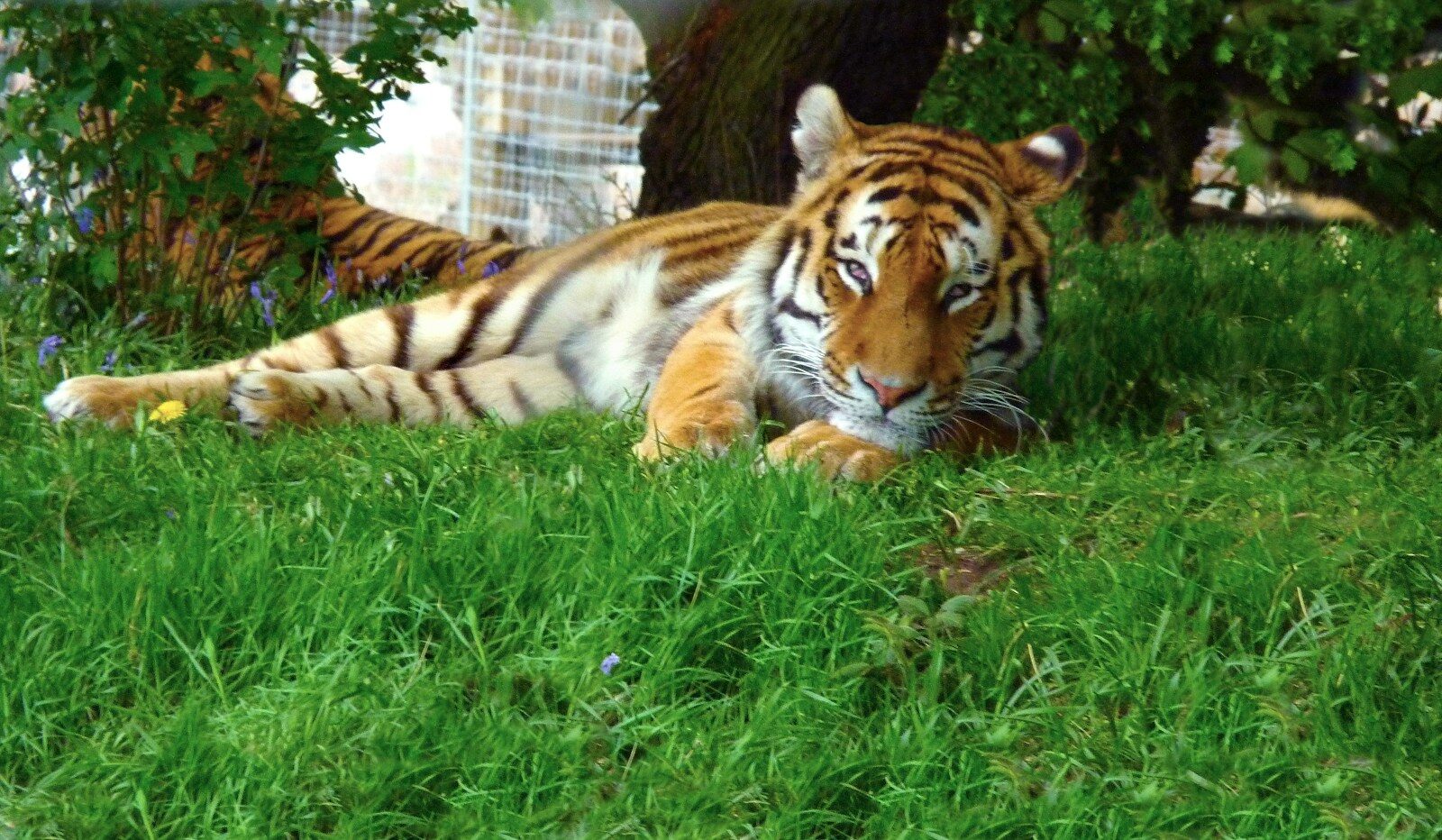
The enclosure houses Amur tigers, also known as Siberian tigers, one of the largest living subspecies of tiger.
According to evidence presented at Doncaster Coroner’s Court on 15 October, Chapman climbed over two fences before entering the enclosure.
The animal involved was Altai, a male Amur tiger weighing approximately 200kg.
The tiger approached Chapman, and the subsequent encounter caused injuries from which he died.
South Yorkshire Police received reports of the incident at 1.35pm.
Emergency services, including land ambulances, an air ambulance and a doctor, attended the scene. Despite efforts by medical personnel, Chapman was pronounced dead at the wildlife park.
The park was evacuated, and police confirmed that the tiger had remained inside its enclosure and that there was no wider danger to the public.
At the opening of the inquest on Thursday 15 October, coroner’s officer Caitlin Brookes confirmed that an initial post-mortem examination had identified multiple traumatic injuries resulting from the encounter with the tiger.
The full circumstances surrounding Chapman’s death remain under investigation.
Sources: South Yorkshire Police, 10 October; ITV News, inquest report, 15 October.
What was William Chapman doing before entering the enclosure?
Several independent witness accounts provide information about Chapman’s behaviour shortly before the incident.
These accounts are important because they establish a sequence of events, although they cannot reliably establish his thoughts or intentions.
Visitors reported seeing Chapman walking around the tiger viewing area wearing headphones.
One witness described him dancing before entering the enclosure.
Another visitor, Del Taylor, told The Sun that Chapman had asked her to take photographs of him with the tiger visible behind him.
According to Taylor, he appeared cheerful and enthusiastic while posing for the pictures.
After thanking her, he crossed a safety barrier and entered the enclosure.
Other witnesses described efforts to stop him.
Anthony Hunt and his girlfriend Scarlet Hogan, who were visiting the park, told The Telegraph that a woman attempted to prevent Chapman from entering the compound.
Hunt said the woman tried to pull him back before he crossed into the enclosure.
Chapman nevertheless continued.
The accounts suggest that his entry into the enclosure was preceded by observable activity rather than an accidental fall.
However, the descriptions vary in their interpretations of his behaviour.
Some witnesses remembered him appearing happy and excited. Others described behaviour that they considered unusual or disconnected from his surroundings.
Neither observation is sufficient to determine his mental state.
A person can appear cheerful while experiencing significant psychological difficulties, just as behaviour considered unusual by an observer does not necessarily indicate a psychiatric episode.
The available accounts establish what witnesses reported seeing, but the reasons for Chapman’s actions remain unresolved.
Sources: The Independent, eyewitness accounts; Sky News, eyewitness reporting.
What did he do when he approached the tiger?
Accounts of Chapman’s behaviour inside the enclosure are particularly unusual.
Hunt told Sky News that Chapman appeared to lower himself towards the ground, bow and look towards the sky.
His girlfriend described similar behaviour, interpreting it as Chapman praying towards the tiger.
Witnesses also reported that Chapman approached the animal while it was initially positioned on an elevated wooden platform.
A short video, apparently filmed by Chapman and posted to an Instagram account subsequently removed, shows the tiger several metres away.
The recording captures Chapman approaching the animal while visitors can be heard reacting with alarm.
This footage was examined and reported by major news organisations, including Sky News and ITV News.
The video establishes that Chapman appeared to be recording part of his approach to the tiger.
It does not explain why he entered the enclosure or what he intended to achieve.
Some witnesses subsequently described Chapman speaking to the tiger in a manner more commonly associated with addressing a domestic animal.
He was reportedly heard telling it to stop and describing its behaviour as naughty.
Other accounts described him gesturing towards the animal.
These observations have prompted considerable speculation online about whether Chapman believed he could communicate with the tiger, thought it would behave harmlessly or had some other purpose.
None of those explanations has been confirmed.
The reported praying or bowing also cannot, by itself, establish that Chapman was acting from a religious belief or ritual intention.
Similarly, filming the animal does not prove that the incident was intended as a social media stunt.
What is established is that Chapman approached a dangerous wild animal after crossing the enclosure barriers, and that the interaction ended in his death.
Source: Sky News, witness interviews and reporting.
Did William Chapman’s mental health contribute to the incident?
This has become one of the central questions following the inquest’s opening.
On 15 October, Doncaster Coroner’s Court heard that Chapman had been diagnosed with schizophrenia and had experienced previous episodes of psychosis.
He was receiving care from adult mental health services in Doncaster.
The hearing was also told that he had been considered highly functioning and independent, without formal care requirements.
Chapman’s family has expressed concerns about his contact with mental health services in the period before his death.
As a result, the Rotherham, Doncaster and South Humber NHS Foundation Trust has launched an investigation.
In a statement released through South Yorkshire Police on 14 October, the family confirmed that Chapman had experienced significant mental illness over several years and had been prescribed medication.
They said it would be for the coroner to determine what part this may have played in his death.
This distinction is essential.
A diagnosis of schizophrenia does not establish that a person was experiencing psychosis at a particular time, nor does it explain every decision that person makes.
According to the NHS, psychosis can involve hallucinations, delusions and changes in thinking which affect a person’s perception of reality.
Experiences vary considerably between individuals and between episodes.
A person experiencing psychosis may have beliefs or perceptions that others do not share. However, there is currently no published clinical evidence establishing whether Chapman was experiencing those symptoms when he entered the enclosure.
There is also no established evidence that he intended to die.
The fact that somebody knowingly crosses a physical safety barrier does not necessarily demonstrate that they fully understand or accept the consequences of doing so.
Investigators will need to consider the available medical evidence alongside witness statements and the events recorded at the park.
The family’s concerns about his care also remain allegations requiring examination. The announcement of an NHS investigation does not itself establish that medical professionals failed in their duties.
Source: ITV News, 15 October inquest findings.
Was the incident deliberate, accidental or an attempt at suicide?
The evidence supports different conclusions about different aspects of the incident.
Chapman physically crossed two barriers and entered an enclosure containing a tiger.
The inquest and eyewitness accounts establish that this was not an ordinary visitor accidentally falling into an animal enclosure.
He also appears to have approached the tiger rather than remaining near the point where he entered.
But whether he intended to place himself in mortal danger, believed he could safely interact with the animal or acted under some form of impaired judgement has not been established.
There is no confirmed finding that Chapman intended to take his own life.
Equally, the presence of a recording device and earlier photographs cannot establish that he intended to perform a stunt for an online audience.
The reported behaviour inside the enclosure, including bowing and speaking to the tiger, could potentially become relevant evidence when considered alongside his medical history.
At present, attempting to assign a single motive would go beyond the available facts.
The coroner’s investigation is expected to provide a more complete account of the circumstances, including any contribution from Chapman’s health and treatment.
Who was William Chapman?
William Harry Bruce Chapman was born in Chichester in 2002 and was living in Doncaster at the time of his death.
He was 24 years old, according to information presented at the opening of the inquest.
The hearing was told that he was working as a self-employed online trader.
Chapman also had a background in acting.
As a child, he attended the Jackie Palmer Stage School in High Wycombe, Buckinghamshire, and appeared in television productions including ITV’s May Contain Nuts and the BBC’s True Stories.
Following his death, the stage school published a tribute remembering his time as a student and his development as a performer.
His family described him as a bright and engaging young man whom they loved deeply.
They have asked the public and media to respect their privacy, and specifically requested that people do not approach family members or continue searching through their private social media accounts.
Their statement makes clear that the family is still seeking answers about what happened.
Source: South Yorkshire Police, family statement, 14 October.
Could the tiger have been expected to behave differently?
Altai is an Amur tiger, sometimes called a Siberian tiger.
The species is a powerful carnivorous predator whose natural behaviour differs fundamentally from that of a domesticated animal.
Yorkshire Wildlife Park’s Land of the Tigers is a purpose-built environment featuring woodland, grassland, elevated resting areas and a pool.
Visitors normally observe the animals from a raised walkway approximately 300 metres long, which separates the public from the animals’ living space.
Large carnivores kept in managed environments remain capable of inflicting serious injuries, regardless of whether they have become accustomed to the presence of humans nearby.
Following the attack, animal keeper Reece Oliver told Sky News that Altai might initially have been investigating or playing with Chapman rather than immediately attempting to kill him.
That was Oliver’s interpretation of the observed animal behaviour, rather than a confirmed finding about Altai’s intentions.
In large predators, exploratory behaviour, play and predatory responses can all present serious risks to humans.
There is no evidence that Altai had previously developed any relationship with Chapman.
Nor is there evidence that the tiger was trained or expected to tolerate members of the public entering its enclosure.
Whatever Chapman believed about the encounter, entering the animal’s habitat exposed him to an exceptionally dangerous situation.
Yorkshire Wildlife Park has confirmed that Altai survived the incident unharmed and will not be euthanised.
Source: Yorkshire Wildlife Park, Land of the Tigers; Sky News, animal keeper interview.
How was Chapman able to enter the enclosure?
This is another question investigators must address.
The inquest heard that Chapman crossed two fences to reach the tiger’s habitat.
Witness accounts describe him entering from an elevated visitor area, with at least one person attempting to prevent him from continuing.
The circumstances differ from an animal escaping its enclosure or an ordinary visitor entering an area unintentionally.
Yorkshire Wildlife Park has said its emergency procedures were activated following the incident, and staff worked to secure the animal.
City of Doncaster Council, the relevant licensing authority for the wildlife park, has launched a health and safety investigation.
The investigation is expected to examine the circumstances of the incident and relevant safety arrangements.
However, the fact that Chapman managed to enter the enclosure does not, by itself, establish that the park breached its legal obligations.
Professor Amy Dickman, a wildlife conservation specialist at the University of Oxford, told The Guardian that preventing determined individuals from deliberately breaching safety barriers can be extremely difficult.
Campbell Murn, a conservation scientist at the University of Reading who previously served on a government zoo expert committee, similarly noted the practical limitations of monitoring every visitor at a large attraction.
Their comments do not amount to a formal assessment or clearance of Yorkshire Wildlife Park.
The Born Free Foundation, which campaigns on animal welfare and the keeping of wild animals in captivity, has called for an urgent review of how Chapman was able to enter the enclosure.
The safety investigation will need to establish what protective measures were in place, how they functioned and whether any further action is necessary.
Source: The Guardian, zoo safety experts, 13 October.
Why has the sharing of videos caused controversy?
Within hours of the incident, recordings taken by visitors began circulating on social media.
Some showed Chapman’s encounter with the tiger, while other content included edited or artificially generated material.
South Yorkshire Police quickly asked the public not to circulate distressing footage.
The controversy intensified after US President Donald Trump shared a video of the attack on his Truth Social account.
He subsequently posted an AI-generated video depicting himself playfully interacting with a tiger.
Chapman’s family strongly criticised the circulation of footage and other content relating to his death.
In their statement released by South Yorkshire Police, the family said the material was causing serious distress while they were attempting to come to terms with their loss.
They asked people to stop distributing it.
The recordings may be relevant to official investigations, but their evidential value does not require widespread public distribution.
The available witness accounts and verified investigative findings allow the circumstances to be examined without publishing graphic images of Chapman’s final moments.
Source: South Yorkshire Police, family statement; Sky News, 14 October.
What happens next?
Three separate processes are now relevant to establishing the full circumstances of Chapman’s death.
South Yorkshire Police have carried out enquiries into the incident and gathered information relating to the events at the park.
City of Doncaster Council is conducting a health and safety investigation because of its responsibilities as the wildlife park’s licensing authority.
The Rotherham, Doncaster and South Humber NHS Foundation Trust has also begun an investigation following concerns raised about Chapman’s mental health care.
These investigations address related but distinct questions.
The council’s investigation concerns the circumstances of the incident and the park’s safety arrangements.
The NHS investigation concerns Chapman’s care and the issues raised by his family.
The coroner’s inquiry will consider the evidence relevant to establishing how Chapman died and the circumstances surrounding his death.
Senior Coroner Nicola Mundy opened the inquest at Doncaster Coroner’s Court on Thursday 15 October.
The hearing was told that a more detailed post-mortem report was still awaited.
A full inquest is scheduled for 18 March 2027.
Until further evidence is available, several important questions remain unanswered.
What was Chapman’s mental state immediately before entering the enclosure? What did he expect to happen when he approached Altai? Was his judgement affected by an illness or another factor? Were there warning signs that could reasonably have been identified before the incident? And were the park’s safety procedures sufficient in the circumstances?
The available evidence cannot yet provide definitive answers.
Why did William Chapman enter the tiger enclosure?
The most significant finding from the investigation so far is that Chapman’s actions cannot be reliably explained through the eyewitness accounts alone.
Those accounts describe an unusual sequence of behaviour. They show that he crossed barriers, approached the tiger and apparently filmed part of the encounter.
But the information disclosed at the inquest introduces additional circumstances which must be considered before reaching conclusions about his intentions.
Chapman had experienced serious mental health difficulties and had previously been diagnosed with schizophrenia. His family has raised concerns about his medical care, and the responsible NHS trust is investigating.
That history could prove relevant, although no finding has yet established that it caused or contributed to the incident.
There is also no confirmed evidence that Chapman intended to die, was attempting an organised stunt or entered the enclosure for a particular religious or symbolic purpose.
His family has asked for those questions to be answered through the proper investigative process.
For now, the strongest conclusion supported by the evidence is that Chapman intentionally crossed the physical barriers into the enclosure, but the reasons for that decision remain unknown.
The tragedy has prompted legitimate questions about zoo safety and mental health care. It has also demonstrated how quickly extraordinary and distressing events can generate confident explanations before the evidence has been established.
Those explanations may ultimately prove correct, partly correct or entirely mistaken.
The investigation into William Chapman’s death is still at an early stage. Its findings, rather than the speculation surrounding the footage, will be essential to understanding why he entered the enclosure and whether anything could have prevented what followed.
Sources
- South Yorkshire Police: Update on incident at Yorkshire Wildlife Park, 10 October 2026
- South Yorkshire Police: Family tribute and statement, 14 October 2026
- ITV News: Tiger attack victim had experienced previous bouts of psychosis, inquest hears, 15 October 2026
- Sky News: Family raise concerns about contact with mental health services, 15 October 2026
- Sky News: Witness accounts and footage from Yorkshire Wildlife Park, 14 October 2026
- The Independent: What happened in the Yorkshire tiger attack? Witness accounts and family statement
- The Guardian: Man killed by tiger at Yorkshire Wildlife Park named; safety expert responses, 13 October 2026
- The Guardian: Inquest hears of Chapman’s history of psychosis, 15 October 2026
- Yorkshire Wildlife Park: Land of the Tigers
- NHS: Psychosis overview and symptoms