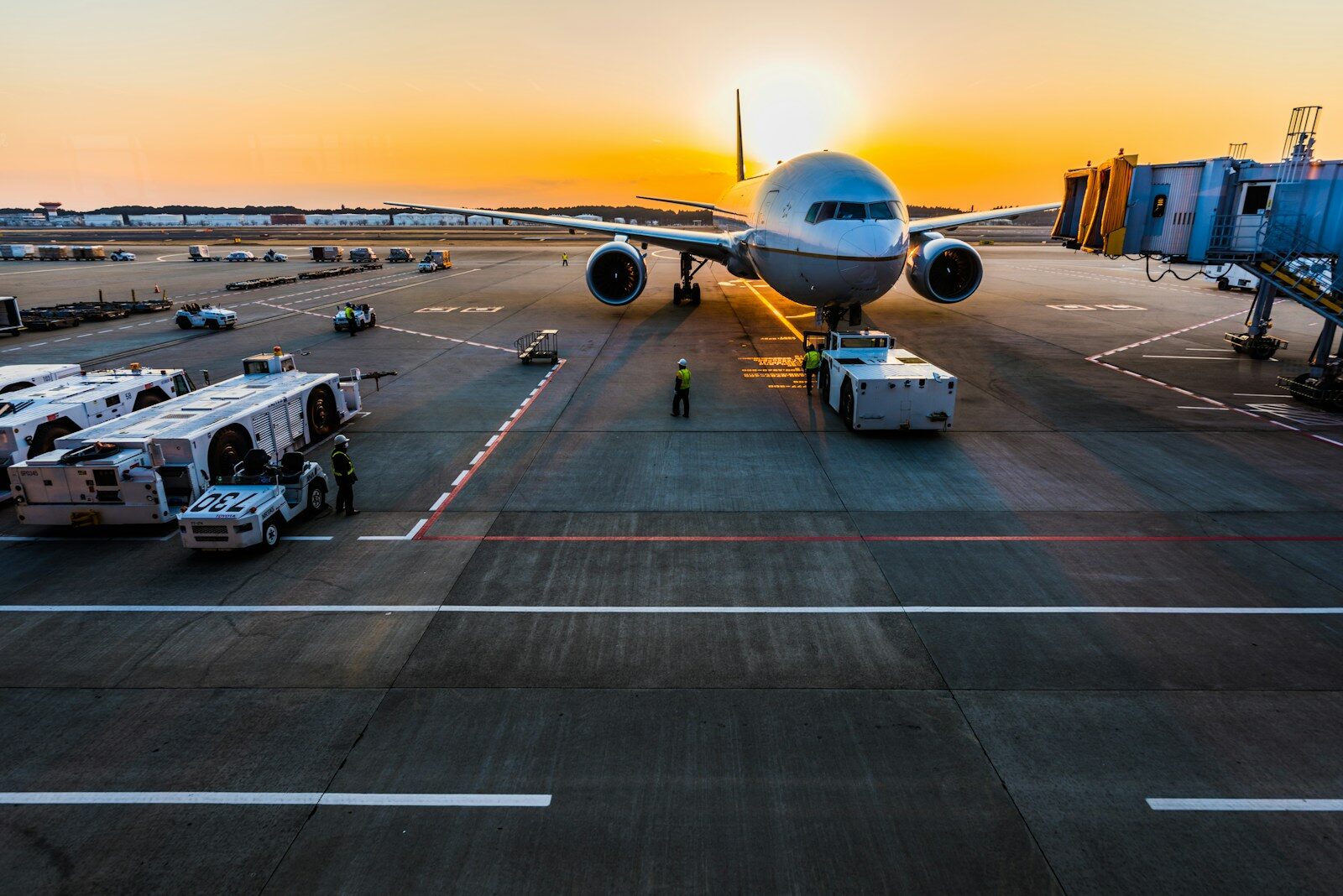
Doncaster Sheffield Airport is set to be purchased by the South Yorkshire Mayoral Combined Authority (SYMCA), ending more than two decades of ownership by the Peel Group and placing the former international airport into public ownership.
The announcement, made on 19 October 2026, represents a major change to the reopening plans for the airport, which closed in November 2022 after its private owners concluded that it was no longer financially viable.
Under the proposed agreement, South Yorkshire’s regional authority, led by Mayor Oliver Coppard, will purchase the airport and an adjoining employment development site known as the Innovation Quarter from Peel Land.
If approved, the South Yorkshire Mayoral Combined Authority will become the freehold owner of Doncaster Sheffield Airport, while City of Doncaster Council will retain its existing lease and its council-owned company, FlyDoncaster, will continue leading the reopening and operation of the airport.
The purchase still requires formal approval from both the South Yorkshire Mayoral Combined Authority and Peel’s board. The price has not yet been disclosed.
Regional leaders are due to consider the agreement on Tuesday 27 October 2026, with Doncaster Council examining the proposals at an extraordinary Cabinet meeting on Wednesday 21 October.
The development follows years of negotiations, public campaigning, disputes over the airport’s existing lease and substantial commitments of public funding.
It also raises several important questions about what the purchase will cost, how the airport will be operated and whether the change in ownership will make its long-awaited reopening more achievable.
Who currently owns Doncaster Sheffield Airport?
Doncaster Sheffield Airport is currently owned by companies associated with the Peel Group, the property and infrastructure business that developed the former RAF Finningley airbase into a commercial airport.
Peel opened the airport to commercial passenger services in April 2005, initially operating under the name Robin Hood Airport Doncaster Sheffield.
The airport became a significant regional transport facility, serving holiday destinations and international routes through airlines including TUI, Wizz Air and Flybe.
However, its financial performance remained a concern.
Following the departure of Wizz Air as a permanent base operator in 2022, Peel announced a strategic review and subsequently decided to close the airport.
Commercial operations ended in November 2022.
Peel maintained that the airport had failed to attract the volume of passengers and airline activity necessary to cover its operating costs. The company said high fixed costs, reduced expected aviation revenue and wider changes in the airline industry meant it could not identify a viable operating plan.
The closure was opposed by local politicians, businesses and campaigners, who argued that the airport had an important role in South Yorkshire’s economy and future development.
Since then, City of Doncaster Council has pursued several different approaches to restoring aviation services.
In March 2024, the council signed a 125-year lease with Peel, allowing it to take control of the airport site for the purposes of reopening.
However, Peel remained the freehold owner.
That distinction has become central to the latest developments.
A lease gives an organisation rights to use land under specified conditions, but the freehold remains with the property owner.
The proposed October 2026 purchase would transfer that underlying ownership to the South Yorkshire Mayoral Combined Authority.
Sources: City of Doncaster Council, airport lease decision; ITV News, history of the airport’s closure.
What has been announced about the airport’s ownership?
On Monday 19 October, the South Yorkshire Mayoral Combined Authority announced that negotiations with Peel had resulted in an agreement to purchase the airport and surrounding employment land.
The transaction would bring the airport into public ownership through the regional authority.
This means the airport’s freehold would be owned by a public body representing South Yorkshire rather than a privately owned property company.
The agreement includes land associated with the proposed Innovation Quarter, part of the wider development plans surrounding the airport.
The official SYMCA announcement states that the purchase would provide greater long-term control over the site and create opportunities for aviation, manufacturing, employment and further commercial investment.
South Yorkshire Mayor Oliver Coppard described the agreement as a major step towards securing the airport’s future.
He said the deal would place decisions about the airport’s long-term development in public hands.
Doncaster Mayor Ros Jones also welcomed the proposals, describing the reopening of the airport as her principal priority for the city.
Peel Land managing director Stephen Wild confirmed that the company had been working with the two public authorities on the wider plans.
The announcement does not mean the sale has already been completed.
The parties have agreed terms, but formal decisions and the necessary legal arrangements must still be concluded before ownership transfers.
Why is South Yorkshire buying the airport instead of continuing to lease it?
The decision to pursue outright ownership follows a prolonged disagreement concerning the terms of the existing lease.
When Doncaster Council signed its 125-year agreement in March 2024, the arrangement was intended to provide the legal control necessary to begin reopening the airport.
However, the agreement subsequently attracted criticism over several provisions, including financial obligations and circumstances in which Peel could terminate the lease.
The issues became particularly significant when South Yorkshire’s regional authority considered committing up to £160 million towards the reopening programme.
SYMCA wanted changes to the lease before releasing further funding.
One disputed provision concerned what was known as turnover rent.
Under the original arrangements, according to reporting by The Yorkshire Post, Peel could potentially receive a percentage of certain future income associated with the airport above its basic rent payments.
The provision reportedly extended to some forms of public funding.
That created a concern that money intended to support the airport’s reopening could result in additional payments to the private landowner.
According to details from the latest SYMCA board papers reported by The Yorkshire Post on 19 October, attempts to reach an acceptable solution to the turnover rent provision were unsuccessful.
Because the funding conditions could not be satisfied, the public authorities were unable to proceed on the originally intended basis.
Negotiations nevertheless continued.
During the summer, Peel indicated a willingness to consider a different arrangement, and SYMCA pursued the possibility of purchasing the freehold outright.
The resulting agreement covers more than 1,000 acres of airport and associated development land, according to the details reported from the board papers.
The proposed purchase therefore represents a significant restructuring of the relationship between the airport’s owner, tenant and public funders.
Rather than continuing to negotiate the conditions under which public money could be invested in a privately owned airport, the regional authority is proposing to acquire the underlying property.
What happens to Doncaster Council’s 125-year lease?
The existing lease is expected to remain in place, but the landlord would change.
Under the proposed structure:
- South Yorkshire Mayoral Combined Authority would own the airport’s freehold and become the landlord.
- City of Doncaster Council would retain its existing leasehold interest.
- FlyDoncaster Ltd, the council-owned airport company, would continue to lead airport operations and the reopening programme.
- Munich Airport International would continue providing specialist operational and management expertise under its partnership arrangements.
The arrangement creates several different levels of responsibility, although they would be controlled or supported by public authorities rather than having Peel as the private freeholder.
The new ownership structure would also mean that the regional authority had a direct property interest in both the airport and the adjoining development land.
The full implications for the existing lease, including precisely which conditions would be varied or removed, have not yet been publicly confirmed.
It is therefore premature to assume that every contractual issue previously raised has been resolved in a particular way.
Nevertheless, transferring the freehold to SYMCA would remove Peel from its existing position as the airport’s long-term private landlord.
Will Doncaster Council or Oliver Coppard own the airport?
The distinction is important.
If the purchase is approved, the airport will be owned by the South Yorkshire Mayoral Combined Authority, a statutory public organisation responsible for regional transport, economic development and other devolved functions.
It will not become the personal property of Mayor Oliver Coppard.
Nor will the freehold be owned directly by Doncaster Council.
SYMCA is led by the elected Mayor of South Yorkshire and works with the leaders of the region’s four metropolitan authorities: Sheffield, Rotherham, Barnsley and Doncaster.
Its ownership would therefore place the airport within a regional public governance structure.
Doncaster Council would continue to play a major role because it holds the existing lease and owns FlyDoncaster.
This is relevant because the reopening project is intended to serve the wider South Yorkshire economy, including businesses and passengers from Sheffield, Rotherham and Barnsley, as well as Doncaster itself.
The proposed purchase would make the airport a publicly owned regional asset.
Who will actually operate Doncaster Sheffield Airport?
Ownership of the land and operation of the airport are separate responsibilities.
The airport’s planned operator is FlyDoncaster Ltd, a company established and wholly owned by City of Doncaster Council.
FlyDoncaster was created to manage the airport’s reopening and eventual operations.
It has been assembling the specialist personnel, equipment, infrastructure and regulatory arrangements needed for commercial aviation to return.
In February 2025, the council announced a partnership with Munich Airport International GmbH, a German airport management and consultancy business associated with Munich Airport.
The company was appointed to provide operational and management services, working with British aviation specialists FP Airports.
Munich Airport International brings experience in developing and managing airport operations, including preparing facilities to meet regulatory requirements.
Its involvement has sometimes led to confusion about who will own or operate the airport.
The arrangement announced by Doncaster Council identifies Munich Airport International as a strategic services partner to FlyDoncaster. It has not been announced as the new freehold owner.
The proposed purchase by SYMCA would not, on the information currently published, transfer the airport’s operation to a completely new private company.
FlyDoncaster remains central to the reopening strategy.
Sources: City of Doncaster Council, airport statements; Munich Airport International partnership announcement.
How much will it cost to buy Doncaster Sheffield Airport?
The purchase price has not yet been made public.
That is one of the most important outstanding questions.
SYMCA has announced the agreement and confirmed the proposed transfer of the airport and neighbouring land, but it has not disclosed the amount that will be paid to Peel.
Speaking to The Yorkshire Post on 19 October, Oliver Coppard said the transaction remained commercially confidential while the necessary approvals and legal arrangements were being completed.
He said the figures would be made public once the deal was concluded.
The mayor described the proposed transaction as a good deal for the region, although the financial terms have not yet been released for independent public assessment.
It is important to distinguish the undisclosed purchase price from the sums already committed or proposed for reopening the airport.
Those are related, but different, financial questions.
Hasn’t £160 million already been allocated to the airport?
Yes.
In September 2025, the South Yorkshire Mayoral Combined Authority approved up to £160 million in funding to support the reopening programme, subject to conditions and safeguards.
The funding was intended to support infrastructure, regulatory approvals, airport reinstatement and the costs associated with returning the site to commercial operation.
It was not an agreed purchase price for the airport land.
The original funding model also involved City of Doncaster Council borrowing money ahead of receiving regional funding.
At its meeting on 27 November 2025, the council approved borrowing arrangements under which debt was expected to peak at £57 million in 2032/33.
The financial plan considered at that meeting estimated total programme costs of £193 million, including borrowing interest, over the period required to bring the airport fully into operation and profitability.
Those figures were based on the arrangements being considered at the time.
They should not be added to the new purchase price without understanding how the proposed acquisition will change the financial structure.
The newly agreed purchase may require revisions to funding agreements, contractual arrangements and the overall business case.
Until the financial papers and transaction details have been fully examined, the total cost of acquiring and reopening the airport under the new structure cannot be stated with certainty.
The public is therefore waiting for two important pieces of information: the actual acquisition price and the revised financial implications for the reopening programme.
Source: City of Doncaster Council, 27 November 2025 borrowing approval.
Why are public authorities willing to spend so much money on the airport?
Supporters of the reopening argue that Doncaster Sheffield Airport could play an important role in South Yorkshire’s economic development.
Before closing, the airport served a large regional catchment area, including communities across South Yorkshire, North Nottinghamshire and neighbouring parts of Lincolnshire and Derbyshire.
It provided direct and indirect employment and supported passenger travel, business activity and freight operations.
The reopening project is also closely connected to a wider development strategy known as South Yorkshire Airport City.
This aims to use the airport as the centre of a larger economic development programme involving aviation, logistics, advanced manufacturing, technology and employment land.
The proposed purchase of the adjacent Innovation Quarter is significant in that context.
The land is intended to support businesses and employment opportunities linked to the wider airport development.
Regional leaders argue that having public control of both the airport and surrounding development land would allow them to coordinate investment and pursue a longer-term development strategy.
However, the proposed economic benefits remain projections.
They depend on attracting commercial investment, securing aviation operators, completing infrastructure work and generating sufficient demand.
The project also involves substantial public financial exposure.
SYMCA’s own announcement acknowledges that the level of funding creates risks for taxpayers.
The central question is whether the airport and associated development can eventually generate enough economic activity and commercial income to justify the investment required.
Could Doncaster Sheffield Airport make money if it reopens?
That remains uncertain.
The airport’s previous operator concluded in 2022 that commercial aviation at Doncaster was financially unviable.
Peel said the facility had not attracted enough airlines or passengers to overcome its substantial fixed operating costs.
The departure of Wizz Air as a base operator was an important factor in the closure decision.
However, public authorities now envisage a different development model.
Rather than relying solely on passenger flights, the reopening plans place considerable emphasis on freight, logistics and the commercial development of land around the airport.
South Yorkshire’s airport strategy identifies the potential for the site to support cargo services, aviation-related businesses and industrial development.
That could diversify the sources of economic activity associated with the airport.
But the strategy has also attracted questions about the reliability of passenger and freight forecasts, the cost of attracting airlines and the risks of continuing public financial support.
These concerns have been raised during formal SYMCA meetings, including the September 2025 examination of the airport’s business case.
The outcome will ultimately depend on actual commercial demand, operating costs, investment and the airport’s ability to attract sustainable business.
Public ownership provides different options for managing the site and its development. It does not guarantee that commercial aviation will become profitable.
When will Doncaster Sheffield Airport reopen?
The latest official timetable is:
- Autumn 2027: Planned return of freight services.
- Spring 2028: Planned return of passenger flights.
Both targets remain subject to regulatory approval and the completion of operational preparations.
The dates were reiterated in the 19 October 2026 announcement and have not been changed as a result of the proposed purchase.
Previous reopening targets were considerably earlier.
At different stages, public announcements anticipated the return of flights during 2026 and 2027.
However, the scale of the work required to restart an airport that has been closed for several years has proved substantial.
Commercial flights cannot simply resume because the runway and terminal buildings remain standing.
The airport needs the necessary regulatory permissions, operational systems, safety arrangements and equipment.
This includes the reinstatement of controlled airspace, aviation security, air traffic services and emergency response arrangements.
The Civil Aviation Authority must assess relevant applications before the airport can return to normal commercial operations.
A major public consultation on the proposed airspace arrangements ran from 3 August to 4 October 2026.
The airport must now consider the responses and progress through the remaining stages of the airspace change process.
The airport has also been recruiting senior personnel and procuring important equipment, including new fire appliances and radar systems.
The proposed change in ownership is a major financial and legal development, but it does not remove those operational requirements.
Source: Doncaster Sheffield Airport Airspace Change Consultation.
Have flights already returned to Doncaster Sheffield Airport?
There have been individual aircraft movements at the site since its closure, including flights connected with aviation businesses operating there.
These do not mean the airport has resumed scheduled commercial passenger or freight services.
Aircraft associated with 2Excel Aviation have used the airfield under arrangements permitted for those movements.
The airport still requires the relevant licences, certifications and airspace arrangements for its planned wider reopening.
For passengers hoping to book flights from Doncaster, there is presently no confirmed date on which tickets will become generally available.
Airlines, routes and booking arrangements will need to be announced separately as the reopening programme progresses.
The intended return of passenger services in spring 2028 remains a target rather than a confirmed operating schedule.
Why did Peel agree to sell after previously refusing?
This is another question that has attracted considerable attention.
Following the 2022 closure, Doncaster Council explored purchasing the airport and considered compulsory purchase powers.
At the time, the council said Peel had been unwilling to sell on terms it considered acceptable.
The eventual 2024 lease represented a compromise that allowed the public reopening programme to progress without transferring ownership of the land.
The new agreement marks a significant change in Peel’s position.
According to the 19 October announcement, negotiations between Peel, Doncaster Council and SYMCA continued throughout the preceding year.
Following difficulties resolving the existing lease arrangements, the possibility of an outright sale emerged.
The South Yorkshire authority subsequently negotiated terms for the purchase of the airport and associated development land.
Peel has publicly confirmed that it has been working collaboratively with the public authorities on the wider proposals.
However, the company has not provided a detailed public explanation of the commercial considerations that caused it to reconsider an outright sale.
It would therefore be speculative to attribute the decision to a particular financial pressure, unrelated business transaction or change in property strategy.
What can be established is that the parties have moved from a landlord-and-tenant arrangement towards a proposed freehold sale, subject to formal approval.
What is the Innovation Quarter, and why is it included?
The proposed purchase involves more than the airport’s runway, terminal and other aviation facilities.
It also includes the nearby Innovation Quarter employment land, associated with the wider Gateway East development area.
The land forms part of plans to attract businesses involved in aviation, manufacturing, logistics and related industries.
The broader South Yorkshire Airport City strategy treats the airport as an anchor for development around the site.
By purchasing the additional land, SYMCA would gain a more direct role in controlling how part of that development progresses.
This could be important for coordinating infrastructure, attracting companies and developing complementary commercial uses.
It also creates additional financial and planning considerations.
The value of employment land depends on numerous factors, including planning permissions, market demand, infrastructure costs and the uses that can eventually be delivered.
The airport purchase therefore needs to be considered as both an aviation project and a wider property and regeneration transaction.
The detailed financial terms, land boundaries and development obligations will be important in determining what the public is acquiring and what commercial opportunities or risks come with it.
What happens if the deal is rejected?
The purchase requires formal approval.
South Yorkshire Mayoral Combined Authority leaders are scheduled to consider the proposal at 3.30pm on Tuesday 27 October 2026.
Peel’s board must also approve the agreement.
Doncaster Council will examine the proposals at an extraordinary Cabinet meeting on 21 October.
If the necessary approvals are not obtained, the transfer of the freehold cannot proceed under the announced terms.
That would leave the parties needing to consider their remaining contractual arrangements and options for the airport.
The existing lease and unresolved funding conditions have already complicated the reopening programme, so a failure to complete the purchase could create further uncertainty.
However, no decision to reject the agreement has been announced.
The official recommendation is for approval, and both regional mayors have publicly welcomed the proposal.
The exact timetable for legal completion has not yet been confirmed.
Will the airport definitely remain publicly owned?
The proposed deal is intended to place the airport’s freehold into public ownership.
That would be a significant change from the previous ownership arrangements.
However, public ownership does not necessarily determine every future commercial or operating arrangement.
Public authorities can enter into agreements with private companies to provide services, operate facilities, invest in infrastructure or develop land.
Doncaster Council’s existing arrangements with Munich Airport International are already an example of a publicly owned company using specialist private-sector expertise.
The council has also previously considered the possibility of attracting additional private investment to the airport.
Whether future arrangements will include private investment, new operating partnerships or changes to the airport’s corporate structure will depend on subsequent decisions.
There has been no announcement that the proposed freehold purchase is intended to be immediately followed by a resale.
For now, the stated objective is to secure long-term public control of the airport and surrounding development land.
What happens next for Doncaster Sheffield Airport?
The announcement of an agreement to purchase the freehold marks a major change in the airport’s reopening programme, but several important decisions remain.
The first is political and commercial.
South Yorkshire leaders must approve the purchase, Peel must provide its own formal consent, and the necessary contracts must be finalised.
The second concerns funding.
The public authorities must establish how the acquisition fits within the existing financial commitments and what additional costs or revised arrangements will be required.
The third concerns the actual reopening.
FlyDoncaster and its partners must continue preparing the airport to meet the necessary standards, while progressing discussions with airlines, freight operators and other potential customers.
There is also a separate long-term question concerning the development of the Innovation Quarter and the wider Gateway East area.
These decisions will shape the airport’s future well beyond the return of its first commercial flights.
So, who is going to own Doncaster Sheffield Airport?
As of 19 October 2026, the South Yorkshire Mayoral Combined Authority has agreed proposed terms to purchase Doncaster Sheffield Airport and adjoining Innovation Quarter employment land from Peel.
If the agreement receives the necessary approvals and completes, SYMCA will become the airport’s freehold owner.
City of Doncaster Council will retain its lease, while its company FlyDoncaster will continue leading the operational reopening.
The purchase price remains undisclosed, with Mayor Oliver Coppard saying the figures will be published once the transaction is completed.
The change would bring an end to Peel’s position as the airport’s private freehold owner and place the site under regional public ownership.
It also offers a potential resolution to the long-running disputes over the lease that have complicated the release of reopening funding.
But the airport’s future remains dependent on much more than ownership.
Commercial viability, aviation certification, airline agreements and the delivery of the wider development programme will determine whether the project achieves the economic benefits expected of it.
The next major milestone is 27 October, when South Yorkshire leaders are due to decide whether to approve the acquisition.
Until then, the airport remains owned by Peel, with the proposed sale awaiting formal completion.
For Doncaster and the wider South Yorkshire region, the deal represents the most substantial change in the airport’s ownership arrangements since its closure four years ago.
Whether it ultimately proves a successful public investment will depend on the price paid, the obligations assumed and the airport’s performance once commercial services return.
Sources
- South Yorkshire Mayoral Combined Authority: Doncaster Sheffield Airport public ownership deal to go before SYMCA Board, 19 October 2026. Official announcement of the proposed acquisition, parties involved, approval requirements and reopening timetable.
- City of Doncaster Council: Doncaster Sheffield Airport Update, 19 October 2026. Council confirmation of the agreement and the planned ownership structure.
- The Yorkshire Post: Oliver Coppard commits to revealing airport purchase price, 19 October 2026. Reporting on the undisclosed purchase price, lease negotiations and published board papers.
- City of Doncaster Council: Lease Agreement and Associated Documents, March 2024. Official approval of the 125-year lease.
- City of Doncaster Council: November 2025 borrowing decision, 27 November 2025. Details of the £193 million programme estimate and associated borrowing arrangements.
- South Yorkshire Mayoral Combined Authority: Airport City funding decision, 9 September 2025. Funding commitments, commercial conditions and business case scrutiny.
- City of Doncaster Council: Doncaster Sheffield Airport Statements. Historical announcements and details of the FlyDoncaster and Munich Airport International arrangements.
- ITV News: Why did Doncaster Sheffield Airport close?. Background on the airport’s ownership, closure and commercial history.
- Civil Aviation Authority consultation portal: Doncaster Sheffield Airport Airspace Change Proposal, August to October 2026. Regulatory consultation and next steps towards reopening.
- FlyDoncaster: Official airport website. Information concerning the airport’s operating company and reopening preparations.