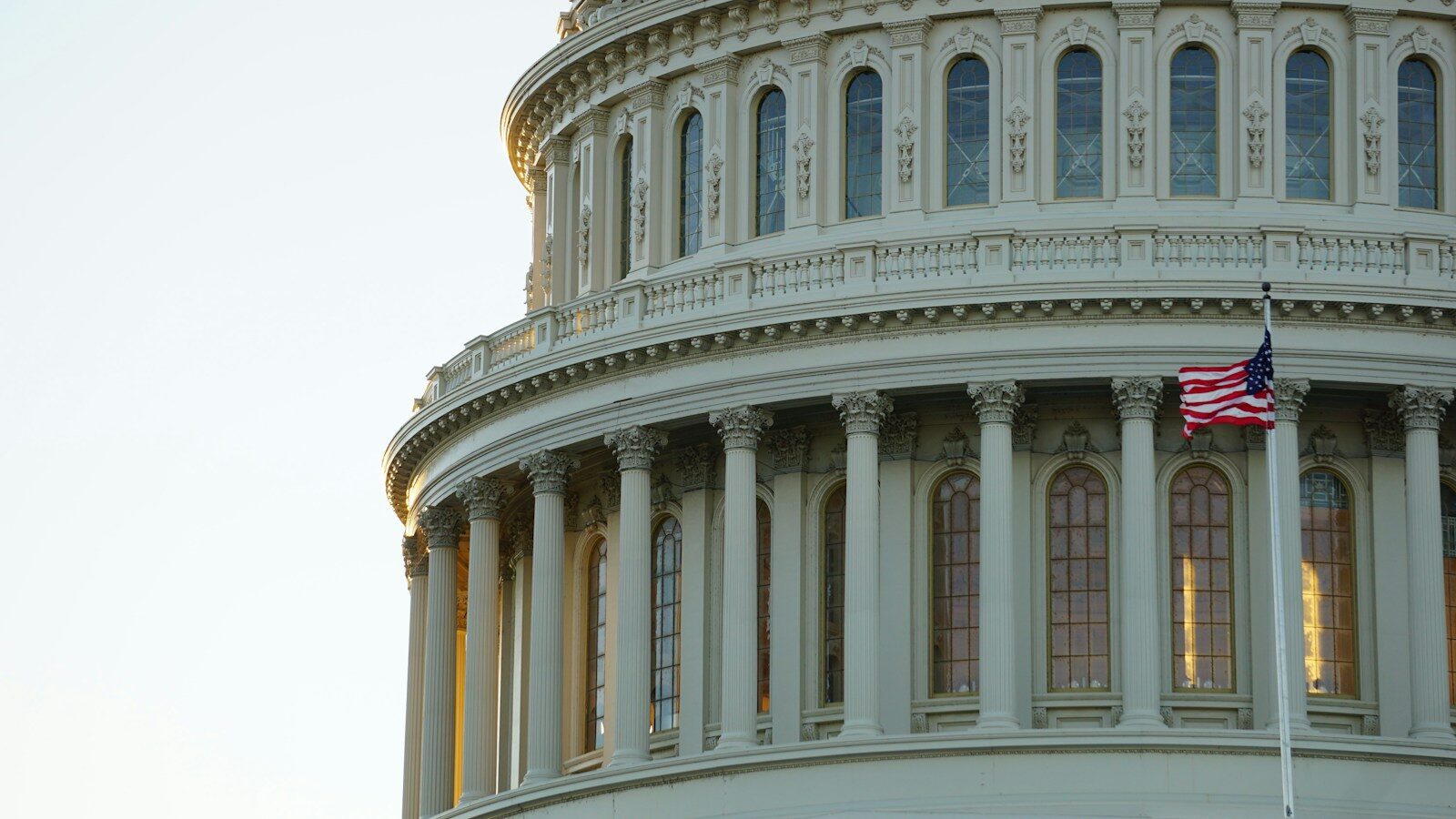
The United States has delivered one of its most dramatic midterm election results in decades, with Democrats winning control of both houses of Congress and significantly weakening President Donald Trump’s ability to govern without opposition.
The elections, held on 3 November 2026, saw Republicans lose seats across traditionally conservative states, including Texas, Kansas, Iowa and South Carolina. Democrats also captured several governorships and made substantial gains in the House of Representatives.
For Britain, the consequences could be significant.
The result gives Democrats greater influence over American trade policy, military spending, support for Ukraine and the ongoing conflicts involving Iran and Israel. It could also change how Britain’s political parties approach their relationships with Washington, particularly after years in which Donald Trump and his political movement have influenced debate across Europe.
The most immediate potential consequence for the UK concerns the economy. The war in Iran has pushed up energy prices, contributed to inflation and placed additional pressure on British households. The election gives Trump’s opponents new opportunities to challenge the conflict and the spending associated with it.
However, Donald Trump remains President until January 2029. He retains substantial control over American foreign policy and the military, meaning the election does not guarantee an immediate change in US policy.
The result also challenges assumptions about the influence of pro-Israel campaign funding. Several candidates calling for restrictions on American military assistance to Israel won important races despite substantial spending against them by organisations associated with the American Israel Public Affairs Committee, or AIPAC.
For Prime Minister Andy Burnham, the outcome creates a new political situation: a weakened American president, an increasingly assertive Congress and a British electorate that has become strongly critical of Trump.
Who won the 2026 US midterm elections?
The Democratic Party won control of both the US House of Representatives and the Senate, overturning Republican control of Congress.
The Associated Press confirmed Democratic control of the Senate late on 3 November, followed by the House early the following morning.
The scale of the victory exceeded many pre-election expectations.
Democrats gained at least seven Republican-held Senate seats, securing a majority of at least 54 seats when including independents aligned with the party. Two additional contests, in Alaska and Mississippi, remained unresolved in the immediate aftermath.
In the House of Representatives, Democrats gained at least 30 seats, winning districts in several states that supported Trump during the 2024 presidential election.
Among the most striking Senate results were victories in Texas, Kansas, Iowa, South Carolina and Ohio.
Texas elected Democrat James Talarico to the Senate, ending a Republican winning streak in the state’s Senate elections dating back to 1988.
Kansas elected its first Democratic senator since the 1930s.
Michigan elected Abdul El-Sayed, who became the first Muslim elected to the US Senate.
The results also included significant Democratic gains in state governments, including a Democratic victory in the Texas governor’s election.
The unusually broad geographical spread of the victories suggests that the results were driven by dissatisfaction extending beyond a handful of closely contested constituencies.
According to Reuters’ election analysis, Republicans lost ground compared with their previous performance in the overwhelming majority of counties where substantial vote totals had been counted.
Some individual races remain subject to outstanding counts and certification, but the overall result is settled: Democrats will control Congress when its new term begins in January 2027.
Why did the Republicans lose so heavily?
The most important issues identified in post-election polling were the cost of living, the war with Iran and concerns about the Trump administration.
The conflict in Iran has been particularly consequential.
American military operations began in February 2026 and have continued for much of the year. Disruption to energy production and transport in the Middle East has pushed global oil and gas prices higher.
This has affected American households through fuel costs and other consumer prices.
Trump himself acknowledged that the war had contributed to the Republican defeat.
Vice-President JD Vance was even more explicit, publicly identifying the conflict as a major reason for the result.
The administration’s tariffs and wider economic policies were also criticised during the campaign.
Democratic candidates concentrated heavily on affordability, arguing that American households were paying the price for decisions made by the administration.
Republicans sought to make the election about immigration, social policy and their opponents’ political positions, but those arguments were insufficient to prevent major losses.
An Associated Press election analysis found substantial frustration with high prices, the Iran war and government corruption.
However, the results should not be interpreted as evidence that Americans have unanimously endorsed every Democratic policy.
The Democratic Party contains considerable ideological differences, ranging from centrist politicians to democratic socialists and outspoken critics of American foreign policy.
Many voters appear to have been motivated by dissatisfaction with the government rather than enthusiasm for a single alternative programme.
That distinction matters when considering what the new Congress will actually do.
What do the US election results mean for Britain?
The most immediate implications concern four areas: the economy, trade, national security and British domestic politics.
The UK does not participate in American congressional elections, and the results do not directly change British law or the composition of Parliament.
But Britain’s close economic and military relationship with the United States means decisions made in Washington can affect British households and businesses.
The United States is Britain’s largest individual national trading partner.
According to the House of Commons Business and Trade Committee, bilateral trade was worth approximately £315 billion in 2024, with the two countries holding around £1.2 trillion in investments in each other’s economies.
American trade policy therefore affects major British industries, including automotive manufacturing, pharmaceuticals, aerospace and financial services.
The United States is also Britain’s most important military ally, with cooperation extending through NATO, intelligence-sharing arrangements and nuclear deterrence.
Changes in American foreign policy can have consequences for UK defence expenditure, military planning and Britain’s relationships with European countries.
The election may alter the balance of influence behind American decisions in these areas, but the President will retain substantial executive authority.
Could the US election result lower UK energy bills?
Potentially, although the election itself will not immediately lower household bills.
The more significant question is whether the new political situation in Washington contributes to an end to the Iran war and a reduction in global energy prices.
The economic consequences of the conflict have already become clear in Britain.
On 5 November, the Bank of England raised its base interest rate from 3.75 per cent to 4 per cent, the first increase for more than three years.
The Monetary Policy Committee voted by eight to one in favour of the increase.
In its November Monetary Policy Report, the Bank explained that disruption to energy supplies had contributed substantially to rising inflation.
UK inflation reached 3.5 per cent in September, and the Bank now expects it to reach approximately 5 per cent by the middle of 2027.
Petrol and diesel prices were around 30 and 40 per cent higher respectively than before the Iran conflict began, according to the Bank’s analysis.
Higher energy costs affect considerably more than motorists.
They increase the cost of heating homes, transporting goods, manufacturing products and operating businesses.
The Bank of England’s decision also has implications for mortgages, savings and borrowing costs.
Although the economic effects of a change in American policy would take time to appear, a sustained reduction in energy prices could ease some of these pressures.
A Democratic-controlled Congress may place greater pressure on the Trump administration to reduce military operations and pursue a negotiated settlement.
But it cannot independently end the conflict.
The President remains commander-in-chief of the American armed forces and retains substantial power over military decisions.
The most important economic consequence of the election for Britain therefore depends partly on whether it changes American policy towards Iran.
What has Prime Minister Andy Burnham said?
Prime Minister Andy Burnham welcomed the possibility of renewed international cooperation following the American election.
Speaking on 4 November, he argued that the result created an opportunity for world leaders to concentrate on resolving international conflicts and reducing the cost of living.
Burnham, who became Prime Minister in July following Keir Starmer’s departure, said the consequences of the Iran war and Russia’s invasion of Ukraine were being felt by households around the world.
He called for international efforts to de-escalate the conflict in the Middle East.
According to The Independent’s report of his remarks, Burnham argued that governments needed to focus more closely on the problems affecting ordinary people.
The comments reflect an important feature of the Labour government’s current position.
Britain has sought to preserve its relationship with Washington while maintaining greater distance from some of Trump’s military and economic policies.
The US election could provide Burnham with additional political room to pursue cooperation with American politicians who take different positions from the President.
That could include Democrats advocating closer relations with European allies, stronger support for Ukraine and a reassessment of American involvement in Middle Eastern conflicts.
However, Burnham must still deal directly with Trump for the remainder of his presidency.
Will Donald Trump still be President?
Yes.
The 2026 elections were midterm elections, held halfway through the President’s four-year term.
Americans elected members of the House of Representatives, senators and a range of state officials.
They did not elect a new president.
Donald Trump’s current presidential term is scheduled to end in January 2029.
His party’s defeat means he will face a Democratic majority in both houses of Congress during the final two years of his presidency.
That has important practical consequences.
Congress controls legislation and plays a central role in approving government spending.
A Democratic majority can refuse to pass legislation supported by Trump, scrutinise the administration’s spending and investigate the conduct of government officials.
The Senate also has authority over the confirmation of senior government appointments, including federal judges and ambassadors.
However, Trump retains the presidential veto, which allows him to reject legislation passed by Congress.
Overriding a veto requires a two-thirds majority in both houses, considerably more than the Democrats have secured.
He also retains significant powers over diplomacy, national security and executive administration.
As the Council on Foreign Relations explained following the election, the result will increase congressional oversight and constrain parts of the administration’s agenda without automatically reversing existing foreign policy.
The practical result is likely to involve greater negotiation, congressional investigations and disputes over spending.
What does the result mean for Reform UK and Nigel Farage?
The American election has implications for the political arguments being made in Britain, particularly by parties that have sought to associate themselves with Trump’s political movement.
Nigel Farage and Reform UK have developed a prominent relationship with American conservative politics.
Farage has maintained personal connections with Trump and has frequently drawn comparisons between political developments in Britain and the United States.
The Republican defeat changes the context in which those comparisons are made.
A major American electoral defeat does not establish that the same political movement would experience an equivalent result in Britain.
The two countries have different voting systems, political parties, economic circumstances and electoral coalitions.
Nevertheless, the result provides new evidence about how voters can respond to economic dissatisfaction, controversial foreign policy and incumbent governments.
It also offers Labour, the Conservatives and other British parties new material for debating the political significance of Trump’s approach.
Polling published by YouGov immediately before the election illustrates the division in British public opinion.
In its 3 November survey, 42 per cent of Britons said they would be more likely to support the Democrats if they were American voters, compared with 10 per cent who preferred the Republicans.
Among Reform UK supporters, the pattern was reversed.
Approximately 36 per cent favoured the Republicans, while 12 per cent preferred the Democrats.
Labour, Liberal Democrat and Green supporters overwhelmingly favoured the Democrats.
Even people who voted Conservative at the 2024 general election were more likely to prefer Democrats than Republicans, although a majority of that group selected neither or were unsure.
These figures demonstrate that Trump’s political appeal is distributed very differently across the British electorate.
They do not constitute a forecast of future UK election results.
What do the US results mean for Labour and the Conservatives?
The results provide Britain’s political parties with contrasting lessons and arguments.
Labour can point to the importance of household finances, the political consequences of military intervention and the electoral difficulties faced by an incumbent government during a period of rising prices.
However, the same issues create challenges for Labour itself.
Burnham’s government is also dealing with inflation, expensive energy and pressure on living standards.
The Bank of England’s latest decision demonstrates that these problems remain serious regardless of which political party controls the government.
For the Conservatives, the American result raises questions about the relationship between traditional conservative politics and the Trump-aligned political movement.
British Conservatives have maintained differing positions on the American President, including over trade, defence and international institutions.
The Republican defeat could influence arguments within the British right about economic policy, political messaging and relations with Reform UK.
The Liberal Democrats and Greens, meanwhile, have generally been more critical of Trump’s policies and can point to the election as evidence of substantial American opposition to his administration.
What cannot yet be established is whether these arguments will materially change British voting behaviour.
The American election provides an international political development that British parties can interpret and respond to. Any direct electoral consequences in Britain would require separate evidence.
Will the Democrats reverse Trump’s tariffs on British goods?
Democratic control of Congress creates greater opportunities to challenge Trump’s trade policies, but an immediate reversal is unlikely.
The UK and United States reached the general terms of an Economic Prosperity Deal in May 2025.
The agreement sought to reduce some of the tariffs imposed on British exports while expanding cooperation in several industries.
Under its arrangements, the UK can export up to 100,000 passenger vehicles annually to the United States at a 10 per cent tariff.
Other provisions concern steel, aluminium, pharmaceuticals, agriculture and aerospace.
The House of Commons Library’s assessment explains that the agreement has been implemented in stages and that some proposed benefits depend on further negotiations or conditions.
American Democrats have criticised several aspects of Trump’s tariff policy, particularly its effects on consumer prices.
But tariffs remain an area in which the President has significant executive authority, subject to congressional legislation and the courts.
A Democratic Congress could investigate the economic effects of tariffs, introduce legislation to restrict certain powers or seek changes through budget and trade negotiations.
Trump could veto legislation attempting to reverse his policies.
A Reuters analysis published on 5 November concluded that Democrats would have greater influence over trade policy but face substantial obstacles to repealing tariffs.
For British manufacturers, the election therefore introduces a potential change in the direction of American trade policy rather than an immediate change to the rates they currently pay.
What does the election mean for NATO and Ukraine?
The result could strengthen congressional support for Ukraine and closer cooperation with European allies.
Democratic politicians have generally been more critical of Trump’s handling of relations with Russia and his approach to American security commitments in Europe.
The new Congress will have greater authority over defence expenditure and the funding provided for international military assistance.
This could create opportunities for increased scrutiny of American policy towards Ukraine and additional financial support.
The Senate’s control over senior diplomatic and defence appointments could also influence the administration’s ability to appoint officials who support particular foreign policy positions.
However, the White House retains significant control over the practical operation of American foreign policy.
Trump can continue conducting negotiations, issuing executive orders and directing important aspects of military and intelligence cooperation.
Even where Congress approves funding, the executive branch retains operational responsibilities that can affect how assistance is delivered.
The Atlantic Council’s post-election assessment suggested that Democrats could increase the political cost of policies considered favourable to Russia, while acknowledging the limits of congressional influence.
For Britain, the outcome could mean a stronger American legislative commitment to European security alongside continued uncertainty about the President’s own decisions.
That distinction will matter to NATO planning and to Britain’s defence relationship with Ukraine.
What do the US midterms mean for Israel and Gaza?
The election has produced one of the most significant changes in American debate over Israel for several years.
A number of candidates who openly opposed continued military assistance to Israel won seats in Congress, including some who faced substantial opposition from pro-Israel political organisations.
Their victories came amid growing criticism of Israel’s military operations in Gaza and wider American involvement in Middle Eastern conflicts.
The humanitarian situation remains severe.
On 26 October, the United Nations Independent International Commission of Inquiry published further findings concluding that Israel continued to commit genocide in Gaza, alongside war crimes and crimes against humanity in the occupied Palestinian territory.
The commission has previously identified actions it considers evidence of genocidal intent, including the deliberate targeting of Palestinian civilians and children.
Israel has rejected allegations of genocide and maintains that its military operations have been directed against armed groups and justified by security concerns.
The UN commission’s conclusions are findings by an independent investigative body, rather than a final judgment by the International Court of Justice.
The new American Congress is expected to include legislators advocating an end to military assistance, restrictions on weapons transfers and stronger measures against Israeli government policies.
One of the most prominent is Abdul El-Sayed, the newly elected senator from Michigan.
El-Sayed has explicitly called for ending American military support used in operations he describes as genocide and apartheid.
His victory has attracted particular attention because pro-Israel political organisations spent substantial sums attempting to defeat him.
However, the Democratic Party does not have a unified policy of ending assistance to Israel.
Many Democratic politicians continue to support the US-Israel security relationship, even while criticising particular Israeli government decisions.
Consequently, the election increases the influence of politicians seeking changes to American policy without guaranteeing that Congress will introduce or pass a comprehensive arms embargo.
The President would also retain the ability to veto relevant legislation.
Did AIPAC influence the election results?
Yes. Organisations associated with AIPAC spent tens of millions of dollars attempting to influence congressional elections.
But the results challenge the claim that AIPAC successfully installed all its preferred candidates.
The American Israel Public Affairs Committee is a major pro-Israel advocacy organisation that seeks to strengthen political support for the US-Israel relationship.
Its electoral activity operates through political action committees and associated organisations, including the United Democracy Project, a super PAC capable of spending substantial sums independently of candidates’ campaigns.
Such expenditure is disclosed through the American campaign finance system.
According to an analysis published by Responsible Statecraft on 5 November, AIPAC-associated political organisations had spent approximately $84.1 million in races decided by the time of publication.
Of that spending, approximately $55.3 million was directed towards races in which their preferred candidates lost.
That represents roughly two-thirds of the analysed expenditure.
The figures include some campaigns from the primary election period, rather than exclusively spending during the November general election.
The largest example was Michigan.
United Democracy Project reportedly spent approximately $31.5 million attempting to prevent Abdul El-Sayed from securing the Democratic nomination and ultimately winning the Senate seat.
He won.
Another substantial intervention occurred in Illinois, where the group spent more than $6 million unsuccessfully attempting to prevent Daniel Biss from winning his Democratic primary.
AIPAC-associated organisations also achieved successes in other constituencies, including a significant intervention in Maryland.
It would therefore be inaccurate to say that the organisations had no influence.
Their spending was considerable, and in individual races it may have affected the volume of advertising, the information available to voters and the political environment faced by candidates.
However, the election results demonstrate that financial intervention did not reliably deliver the outcome those organisations preferred.
The analysis also suggests a sharp deterioration from previous elections.
Responsible Statecraft calculated that AIPAC-associated spending achieved its preferred result in a much smaller proportion of the races it financially supported than in 2022 or 2024.
These calculations measure outcomes against spending, not the exact number of votes caused by advertising.
Political spending can influence an election without determining its result, and an unsuccessful campaign does not mean that the money had no effect.
Nevertheless, several prominent candidates critical of Israel overcame well-funded opposition and secured election to Congress.
That is a significant development for American political debate.
Does the result mean American support for Israel is ending?
There is evidence of an important political shift, but the future of American financial and military support remains uncertain.
Israel has traditionally enjoyed substantial support from both major American political parties.
That consensus has become more contested as the Gaza war, the humanitarian crisis and American involvement in the wider Middle East have developed.
Some newly elected Democrats advocate major changes in the relationship, including restrictions on weapons and military assistance.
There are also divisions within the Republican Party.
Following the election, Vice-President JD Vance suggested that the Republican Party needed to reconsider aspects of America’s relationship with Israel, alongside its involvement in Iran.
Trump himself had suggested shortly before the election that direct military assistance to Israel could end, although his remarks did not amount to a commitment to stop arms sales or all forms of security cooperation.
The distinction is financially significant.
Changing a military aid programme while allowing commercial weapons sales could alter the accounting and political oversight of support without ending the transfer of military equipment.
Recent polling also demonstrates that American Jewish voters cannot be treated as a single political bloc.
An exit poll commissioned by J Street found that 72 per cent of Jewish respondents voted Democratic, while 24 per cent supported Republicans.
The survey also found growing concern about Israel and antisemitism, alongside differences of opinion concerning American military assistance.
For Britain, the significance lies in whether the United States adopts a different approach to the conflict.
British governments have faced persistent questions concerning arms exports, international law, diplomatic recognition and their relationship with Israel.
A change in American policy could affect diplomatic negotiations, international pressure and the options available to Britain and European governments.
But the election itself has not ended the war in Gaza or the wider regional conflict.
Could the Democrats investigate Trump or attempt impeachment?
Yes.
Control of the House of Representatives gives Democrats the authority to initiate investigations into the administration and, if they choose, impeachment proceedings.
Congressional committees can hold hearings, request documents and compel testimony through subpoenas.
Democratic politicians have already indicated that they intend to examine aspects of Trump’s administration, including government spending, conflicts of interest and the conduct of senior officials.
However, impeachment and removal from office are separate processes.
The House can vote to impeach a president by a simple majority.
Removal then requires conviction by a two-thirds majority in the Senate.
Democrats do not possess that level of support.
An impeachment attempt could therefore proceed without resulting in Trump’s removal from office.
Any investigation might nevertheless generate significant political controversy and affect the administration’s ability to pursue its agenda.
There has been no confirmed decision by the incoming Democratic leadership to make impeachment its central priority.
Senior party figures have instead emphasised the cost of living and government accountability.
Will the US election results change British politics?
There are several potential consequences, but their extent remains uncertain.
The result could strengthen arguments for greater cooperation between Britain, Europe and American politicians who support traditional alliances.
It may also affect the influence of Trump-aligned political ideas in Britain, particularly where parties have emphasised similarities between their programmes and the American administration.
Economic policy is another consideration.
American decisions concerning tariffs, energy markets, military expenditure and international trade can affect the economic conditions facing British governments.
The election may increase the pressure on Washington to reconsider policies associated with rising prices.
But the outcome does not automatically translate into an equivalent change in British public opinion.
The YouGov survey conducted immediately before the election found that 41 per cent of Britons expected the result to have at least a fair amount of impact on the UK, compared with 36 per cent who expected little or no impact.
The same research found that Trump was viewed unfavourably by 86 per cent of respondents.
That suggests that the American President’s popularity in Britain was already extremely low before the Republican defeat.
It does not establish whether the midterm result will produce lasting changes in support for Labour, Reform UK, the Conservatives or other British parties.
When does the new Democratic Congress take office?
The newly elected Congress is due to begin its term on 3 January 2027.
Until then, the existing Republican-controlled Congress remains in office.
That creates a transitional period during which the outgoing majority can still consider legislation and government funding decisions.
Once the new Congress takes office, Democrats will control the legislative agenda in both chambers, subject to the usual congressional procedures and constitutional constraints.
The new majority will also gain control of important committees responsible for government oversight.
Those powers could become particularly relevant during negotiations over federal spending, defence budgets and foreign policy.
The next American presidential election is scheduled for November 2028, with the successful candidate taking office in January 2029.
Trump is constitutionally barred from being elected to a third presidential term.
The next two years will therefore involve a President approaching the end of his permitted time in office and a Congress controlled by his political opponents.
What happens next, and what should Britain expect?
The most immediate test of the election’s international consequences will be Washington’s response to the Iran war.
The conflict has become a major political and economic problem for the Trump administration.
It has increased energy prices, contributed to American electoral dissatisfaction and placed pressure on economies far beyond the United States.
A renewed diplomatic effort could ease those pressures.
Further military escalation could produce the opposite effect.
For Britain, the consequences are unusually direct.
Higher global energy prices have already contributed to a Bank of England interest rate increase, and the Bank expects inflation to rise further during 2027.
The next major questions concern American support for Ukraine, the future of the US-Israel relationship and whether Democrats can use their congressional majority to change policy in areas where Trump retains substantial presidential powers.
The outcome has also changed the international political environment facing Britain’s parties.
Labour’s Andy Burnham is dealing with an American administration weakened by an election defeat. Reform UK faces a changed political narrative around Trump, while the Conservatives and other opposition parties must respond to developments that could influence trade, security and the economy.
Yet none of these consequences is predetermined.
Democratic control of Congress does not end Trump’s presidency, and disagreements within the Democratic Party may complicate attempts to establish a common approach to foreign policy.
The election has changed who controls American legislation, spending and congressional scrutiny.
Whether it changes American behaviour abroad will depend on the decisions made over the coming months.
For Britain, the clearest immediate consequence is the possibility of greater American pressure to address the wars and economic policies that have driven up living costs.
The most significant longer-term consequence may be a change in the direction of American foreign policy, particularly concerning Europe, Ukraine, Israel and the wider Middle East.
The 2026 midterms have ended Republican control of Congress and given Trump’s opponents substantial new powers.
They have also demonstrated that war, prices and foreign policy can have decisive electoral consequences.
What remains uncertain is whether that political result will translate into changes large enough to be felt by households in Britain.
Sources
- Associated Press: Democrats win the US House and Senate in the 2026 midterm elections, 4 November 2026.
- Reuters: Democrats seize control of Congress following sweeping midterm gains, 4 November 2026.
- Associated Press: How control of Congress was determined, 5 November 2026.
- The Independent: Andy Burnham calls for international action following the US midterms, 4 November 2026.
- Bank of England: November 2026 Monetary Policy Report, 5 November 2026.
- House of Commons Library: US trade tariffs and the UK, 2026.
- Council on Foreign Relations: What a Democratic Congress could mean for American foreign policy, 4 November 2026.
- Atlantic Council: International consequences of the Democratic midterm victory, 4 November 2026.
- YouGov: What do Britons make of the US midterm elections?, 3 November 2026.
- United Nations: Commission of Inquiry findings on continuing genocide in Gaza, 26 October 2026.
- Responsible Statecraft: AIPAC-associated spending and the 2026 election results, 5 November 2026.
- Al Jazeera: Could the US midterms further isolate Israel in Washington?, 5 November 2026.
- The Forward: Jewish voters, Israel and the 2026 election, 5 November 2026.
- Reuters: Democrats gain influence over American trade policy but face Trump’s veto, 5 November 2026.
- Reuters: Trump retains control of American foreign policy following the midterms, 5 November 2026.