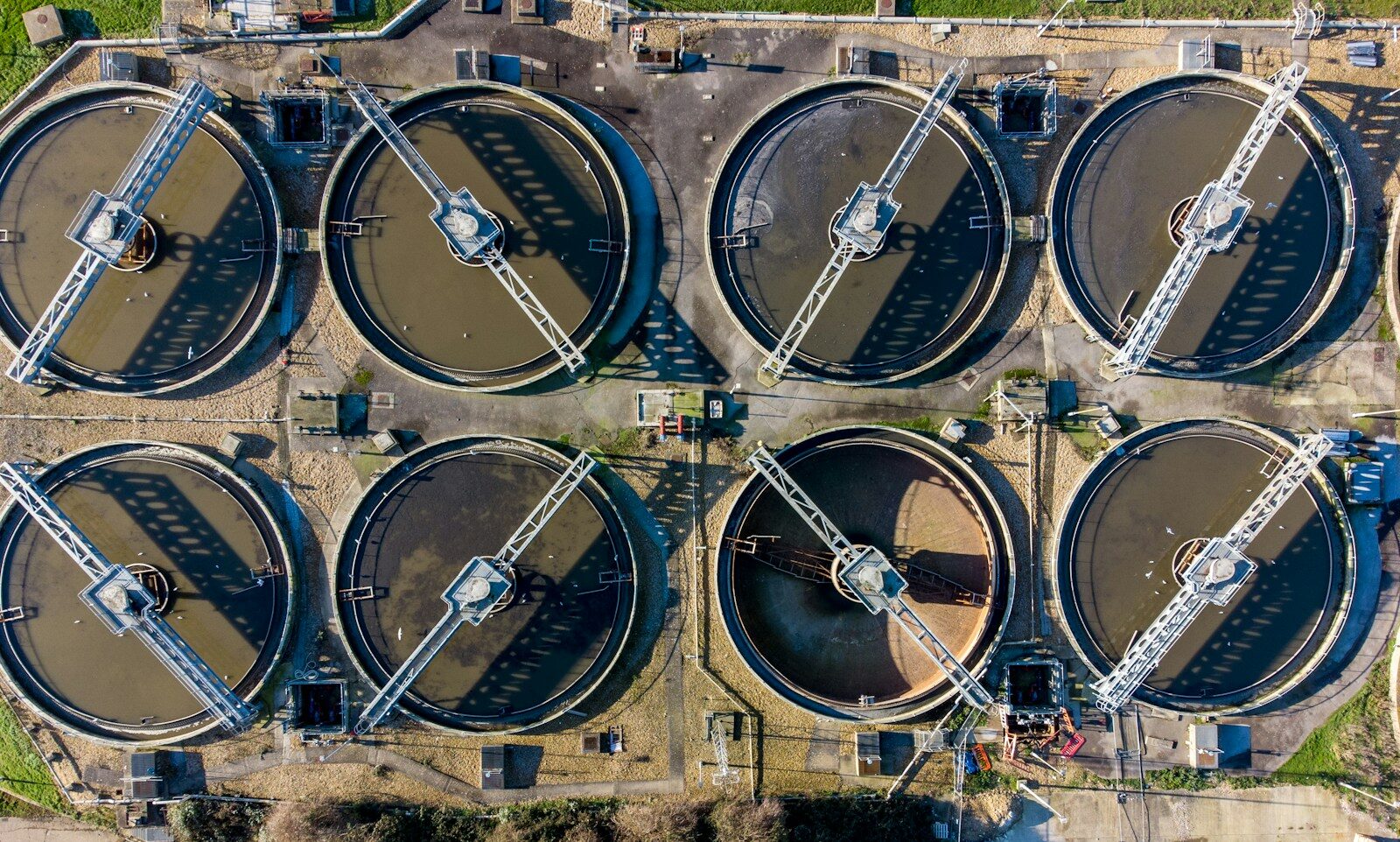
Around 1,000 tonnes of sewage sludge have been discovered in an uncovered stockpile at a landfill site near Doncaster, following months of complaints about foul smells that have forced a neighbouring motocross track to close.
The Environment Agency has ordered the operator of Finningley Landfill to improve its waste-handling procedures and odour controls by 10 November 2026, after inspectors identified concerns about how material was being stored and managed.
The discovery followed complaints from residents and businesses in Finningley and Austerfield, including Doncaster Moto Parc, which has been closed since 25 September.
Staff and visitors at the motocross venue have reported headaches, nausea, dizziness and other symptoms they believe are connected to the smell coming from the neighbouring waste facility.
The business says the closure is costing it thousands of pounds and has warned that it could become financially unviable if the situation continues.
Local MP Lee Pitcher has intervened, demanding action from regulators and raising further questions about asbestos waste at the site.
The Environment Agency has confirmed that it detected sewage-like odours outside the landfill boundary and found approximately 1,000 tonnes of uncovered sewage sludge during an inspection on 9 October.
However, the precise source of all the reported smells, the chemical composition of emissions and whether they caused the symptoms reported by residents and visitors have not been conclusively established.
With the deadline for corrective action approaching, the central questions are whether the operator has brought the site into compliance, whether the smell will stop and when the affected motocross business can reopen.
What is happening at Finningley Landfill?
Finningley Landfill occupies a former quarry near the A614, close to Austerfield and Doncaster Sheffield Airport.
The facility is operated under environmental permits held by Tetron Finningley LLP, according to the Environment Agency’s public register.
Concerns about unpleasant smells have been raised by people living and working near the site for several months.
Doncaster Moto Parc, a neighbouring motocross facility, says the problem became sufficiently serious in September that it could no longer continue operating safely.
On 24 September, the business contacted the office of Lee Pitcher, Labour MP for Doncaster East and the Isle of Axholme, about the situation.
The following day, Doncaster Moto Parc announced that it would close until further notice.
The Environment Agency subsequently opened an investigation.
On 9 October, an Environment Agency officer visited the motocross venue and detected a sewage-like smell beyond the waste facility’s boundary.
The officer then inspected the landfill itself.
According to the agency’s response to Pitcher, inspectors found approximately 1,000 tonnes of sewage sludge being stored outdoors without a cover.
They also examined the site’s approved Odour Management Plan and Environmental Management System.
The inspection identified concerns about whether activities at the facility were being carried out in accordance with the methods and management arrangements described in those documents.
On 20 October, the Environment Agency issued a formal Compliance Assessment Report requiring corrective action.
The deadline was set for 10 November.
The findings were made public after Pitcher followed up with the regulator and disclosed its response in early November.
Source: Doncaster Free Press, 4 November 2026.
What is sewage sludge, and why was there so much of it?
Sewage sludge is the material left over after wastewater has been treated.
When wastewater enters a treatment plant, solids are separated from the liquid during various stages of treatment. The resulting material can contain organic matter, microorganisms, nutrients and other substances originally present in the wastewater.
The Environment Agency defines sewage sludge as residual material from plants treating domestic or urban wastewater, including certain other wastewater streams of similar composition.
It is produced routinely by the wastewater treatment industry.
Depending on its composition and how it has been treated, sewage sludge can be processed for use in agriculture, energy recovery or other applications, or managed as waste under environmental controls.
The material can produce strong smells, particularly where organic substances break down and release odorous gases.
Storing large quantities outdoors may create odour-management challenges, depending on the condition of the material, the storage arrangements and the measures used to control emissions.
The quantity discovered at Finningley is considerable.
One thousand tonnes is approximately equivalent to the weight of 600 to 700 average passenger cars, although its actual volume would depend on how much water the sludge contained.
The inspection does not establish how long the material had been stored in the uncovered pile, where it originally came from or whether the entire quantity was awaiting treatment, movement or disposal.
Those questions have not been answered in the publicly reported findings.
The Environment Agency’s concern was not simply the existence of sewage sludge at the facility. Its inspection raised questions about whether the operator was following the approved procedures governing how the site should be run.
Source: Environment Agency guidance on sewage sludge.
Why did Doncaster Moto Parc close?
Doncaster Moto Parc is a motocross venue on the A614 near Finningley and Austerfield.
The facility has been closed since 25 September after management said that persistent foul odours were making it difficult to operate.
Riders and staff reported feeling unwell during visits to the track, with complaints including headaches, nausea, throat irritation and dizziness.
Motocross is a physically demanding activity involving sustained exertion, meaning riders may be breathing heavily while exposed to their surroundings.
The venue’s management said that concerns had been raised repeatedly before the decision to close.
In a statement reported by the BBC in November, director Ed Bradley explained that the financial effects of the closure had become severe.
The business has warned that it could be lost altogether if it cannot reopen.
In earlier comments reported by the Doncaster Free Press, the venue said staff had sought medical attention and that the ongoing disruption was costing thousands of pounds.
The situation has also prompted support from riders and members of the local motocross community, including a petition calling for action.
The venue has not announced a confirmed reopening date.
The Environment Agency’s discovery of sewage sludge and confirmation of odours beyond the landfill boundary are important developments, but they do not automatically establish that every reported illness was caused by emissions from the site.
That would require additional evidence concerning exposure and health effects.
Nevertheless, the practical consequences are already substantial: a local recreation business has been unable to operate for more than six weeks, with no confirmed date for its return.
Sources: Doncaster Free Press, 25 September; BBC News, 5 November, republished by AOL.
Is the smell from Finningley Landfill dangerous?
An unpleasant smell can affect people’s wellbeing, but the strength of an odour alone cannot determine whether the air contains dangerous concentrations of a particular chemical.
The UK Health Security Agency explains that landfill emissions can produce symptoms such as headaches, eye irritation, nausea and dizziness.
Some odorous compounds can be detected by the human nose at concentrations below those typically associated with serious toxic effects.
Other substances may present risks without producing an obvious smell.
The agency’s research also explains that persistent unpleasant odours can cause distress, disrupt daily activities and affect physical and psychological wellbeing.
Landfill gases may include compounds such as hydrogen sulphide, which is associated with a characteristic rotten-egg smell and can be harmful at sufficiently high concentrations.
However, there is no published evidence from the Finningley investigation establishing that hydrogen sulphide, or any other specific chemical, was present at dangerous concentrations.
The Environment Agency has confirmed a sewage-like smell and concerns about waste management. It has not published findings demonstrating a particular toxic exposure responsible for the illnesses reported.
Similarly, the fact that people have reported symptoms should not be dismissed simply because the precise cause has not been established.
The appropriate response is to identify the source of the nuisance, assess any relevant emissions and ensure that the facility is operating within its environmental permit conditions.
Source: UK Health Security Agency, Impacts on Health of Emissions from Landfill Sites.
Who operates Finningley Landfill?
The Environment Agency’s public environmental permit register names Tetron Finningley LLP as the permit holder for Finningley Landfill Site.
The regulator’s records identify two relevant permitted facilities in the area.
One is Finningley Landfill Site, registered under environmental permit JB3002LB.
The other is Finningley Quarry Waste Facility, registered under permit NB3039RM.
Both are listed under Tetron Finningley LLP.
The permits regulate activities involving waste management, treatment and disposal.
Such facilities are subject to environmental requirements intended to control pollution and other impacts, including odour, dust and waste-handling practices.
The Environment Agency oversees compliance and can require operators to address problems identified through inspections.
The BBC reported on 5 November that the operator had not responded to its previous requests for comment.
No substantive public response from the operator addressing the latest sludge findings was identified in the reporting reviewed for this article.
Sources: Environment Agency permit register, Finningley Landfill; Finningley Quarry Waste Facility.
What has the Environment Agency ordered the landfill to do?
The regulator issued a Compliance Assessment Report on 20 October requiring the operator to address several identified concerns.
According to the findings disclosed by Lee Pitcher, the required measures include:
- Revising the facility’s Odour Management Plan
- Improving its environmental management systems
- Changing how sewage sludge is stored and handled
- Ensuring its operations follow the arrangements described in approved documents
The operator was given until Tuesday 10 November 2026 to complete the corrective actions.
The Environment Agency has confirmed that it expects the operator to manage odours effectively and has warned that additional enforcement action may follow if necessary.
It is important to distinguish the findings from a final determination of every potential regulatory breach.
The agency has identified compliance concerns and specified improvements. The publicly reported material does not establish that a prosecution has been brought or that the facility has been ordered to close permanently.
The regulator has also not confirmed that the entire 1,000-tonne stockpile must be removed by the deadline.
Its reported requirements concern the way the sludge is stored and handled, alongside the wider systems used to prevent and manage odours.
The next significant development will be whether the Environment Agency confirms that those requirements have been met.
Source: Doncaster Free Press, Environment Agency findings.
Is asbestos also being dumped at Finningley?
The site has also attracted concern because it is authorised to handle certain forms of asbestos waste.
In 2022, the Environment Agency approved a variation to Finningley Landfill’s environmental permit allowing the acceptance of hazardous asbestos waste.
A separate permit variation for the quarry waste facility also authorised activities involving asbestos-contaminated material and soils.
These permissions are recorded in the Environment Agency’s official documents.
Asbestos requires careful management because inhaling airborne fibres can cause serious illnesses, including mesothelioma and lung cancer.
However, a permit authorising asbestos waste does not mean that the operator has breached regulations or that asbestos is responsible for the odours being reported.
Lee Pitcher confirmed in early November that he had contacted the Environment Agency again to raise questions about potential asbestos disposal and its implications for local air quality.
The published findings concerning the 1,000 tonnes of sewage sludge do not establish that asbestos has been handled unlawfully or that asbestos fibres have been released into surrounding communities.
Sewage odours and asbestos-related dust also present different environmental questions.
Identifying the origin of a smell does not establish whether airborne asbestos fibres are present.
The relevant questions for regulators are whether asbestos-related activities comply with the site’s permits, whether dust controls are effective and whether any monitoring identifies a risk requiring further action.
Sources: Environment Agency, Finningley Landfill permit variation, 2022; Finningley Quarry Waste Facility permit variation.
What are Doncaster Council and the local MP doing?
The dispute has brought increasing pressure on both the Environment Agency and City of Doncaster Council.
Lee Pitcher said his office first became aware of the complaints on 24 September, when Doncaster Moto Parc contacted him.
He subsequently asked the Environment Agency to inspect the facility and later pursued the regulator for its findings.
After receiving the inspection details, he publicly disclosed the quantity of sewage sludge found and the requirements imposed on the operator.
Pitcher has also contacted the agency about asbestos and raised the situation with Doncaster Council.
He has said he intends to continue pressing those involved until the necessary corrective actions are completed.
Doncaster Mayor Ros Jones acknowledged the issue in October.
She confirmed that the council was in discussions with the Environment Agency, while explaining that the environmental permit was the responsibility of the national regulator.
The mayor’s office subsequently confirmed that the council was also investigating the situation.
This division of responsibility is relevant because residents may reasonably expect their local council to intervene when a business is forced to close or a persistent smell affects homes.
However, the Environment Agency is the primary regulator of the site’s environmental permits and the organisation responsible for assessing compliance with the conditions attached to them.
The council can raise concerns, coordinate with regulators and consider matters within its own powers, but it cannot simply take over the Environment Agency’s permitting responsibilities.
Sources: Doncaster Free Press, 4 November; Local Democracy Reporting Service, 16 October.
Could Finningley Landfill be shut down?
The Environment Agency has powers to take further enforcement action against regulated waste operators where the circumstances justify it.
Depending on the nature and seriousness of a problem, regulatory action can include requiring improvements, imposing additional conditions, suspending activities or pursuing prosecution where offences have occurred.
However, the published response concerning Finningley does not announce an immediate suspension or permanent closure.
The regulator has instead specified corrective measures and given the operator a deadline.
Whether further action becomes necessary will depend on the operator’s response, the regulator’s assessment and any additional findings.
A failure to comply with required improvements could lead to escalating enforcement action.
Equally, the operator may be able to demonstrate that it has addressed the identified concerns without the facility being closed.
There is currently insufficient public information to predict which outcome will occur.
The immediate question is whether the site can operate without causing the persistent odour problems reported by neighbouring businesses and residents.
How can residents report smells or dust from Finningley Landfill?
Residents experiencing persistent odours, dust or other suspected pollution from the facility can report the problem directly to the Environment Agency.
The regulator provides online reporting services for smells and dust associated with waste facilities.
Reports should identify where the problem occurred, when it happened and where the suspected source is located.
Information about the time, duration and location can help regulators investigate patterns and determine whether further monitoring or site inspections are necessary.
Residents can use the following official services:
- Report a smell from a waste facility
- Report dust from a waste facility
- Environment Agency incident hotline: 0800 80 70 60, available 24 hours a day
The Environment Agency assesses submitted reports and decides whether additional action is necessary. It advises that people will not normally receive individual progress updates on their reports.
Anyone concerned about symptoms they are experiencing should seek appropriate medical advice rather than relying on the smell alone to determine whether a harmful exposure has occurred.
What happens on 10 November?
Tuesday 10 November is the deadline established by the Environment Agency for the operator to complete the corrective actions identified during its inspection.
That makes it the next important date in the dispute.
By then, Tetron Finningley is expected to have addressed the specified concerns concerning its odour management procedures, environmental management systems and sewage sludge handling.
The Environment Agency will need to assess compliance and determine whether further regulatory action is necessary.
It remains unclear whether the changes will immediately resolve the problems reported by people living and working nearby.
The management of Doncaster Moto Parc will also need to determine whether conditions have improved sufficiently for the business to reopen.
There is no confirmed reopening date.
As of 8 November, no publicly confirmed outcome of the 10 November compliance deadline has been identified.
What remains unanswered about the Finningley sewage sludge controversy?
The Environment Agency’s findings have established that a substantial quantity of sewage sludge was stored uncovered at the landfill and that the site’s management arrangements required corrective action.
But several questions remain unresolved.
The origin of the sludge has not been publicly established. Neither has the length of time it remained uncovered or the precise reasons for the reported handling arrangements.
The regulator has confirmed the presence of odours beyond the site’s boundary, but detailed findings concerning the chemical composition of emissions and their potential health effects have not been published.
It is also unclear how quickly the corrective measures will improve conditions for neighbouring residents and businesses.
For Doncaster Moto Parc, the financial consequences are already serious. The venue has remained closed since 25 September and has warned that its future is at risk.
The concerns also extend beyond a single business, with residents reporting smells, dust and other disturbances affecting the surrounding area.
The question now is whether the operator can demonstrate that its waste management practices comply with environmental requirements and whether the Environment Agency’s intervention brings an end to the nuisance.
The 10 November deadline provides a clear point at which to assess progress.
Until the regulator confirms what has been done and whether conditions have improved, the future of the affected motocross business and the concerns of nearby residents remain unresolved.
For a dispute that began with complaints about a bad smell, the discovery of 1,000 tonnes of uncovered sewage sludge has brought much greater scrutiny to the operation of Finningley Landfill, the handling of regulated waste and the effectiveness of the authorities responsible for overseeing it.
Sources
- Doncaster Free Press: MP steps in over waste dumping which shut Doncaster bike track, 4 November 2026. Environment Agency findings, corrective actions and MP intervention.
- BBC News: Over 1,000 tonnes of sewage seen at landfill site, 5 November 2026. Agency response, operator and impact on Doncaster Moto Parc.
- Doncaster Free Press: Bike track forced to close after foul smell leaves riders feeling sick, 25 September 2026.
- Doncaster Free Press: Council in touch with Environment Agency over odour complaints, 16 October 2026.
- Environment Agency: Public permit register for Finningley Landfill.
- Environment Agency: Finningley landfill permit variation involving asbestos waste, 2022.
- UK Health Security Agency: Impacts on health of emissions from landfill sites.
- Environment Agency: Report a smell from a waste facility.