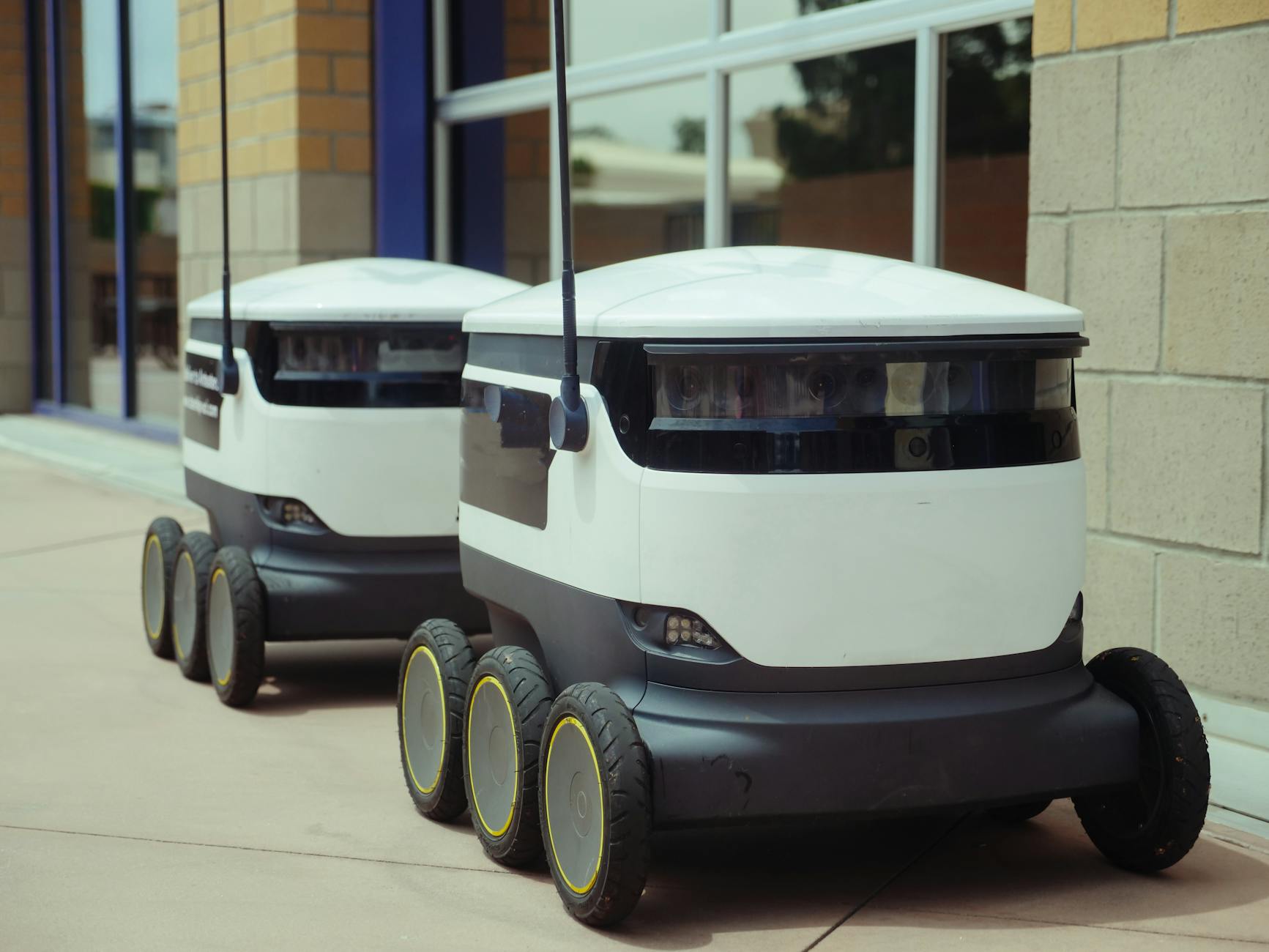
Six-wheeled autonomous robots are now navigating Sheffield’s pavements to deliver food and groceries to 50,000 households, marking the city’s entry into a fast-expanding UK autonomous delivery network that began in Leeds just three months ago.
Starship Technologies’ delivery robots officially launched in Sheffield on 25 March 2026, operating through the Uber Eats platform. Residents across a significant portion of the city can now place orders that arrive not via a cyclist or car, but a battery-powered bot roughly the size of a large suitcase, trundling along the pavement at walking pace.
The rollout follows the company’s December 2025 launch in Leeds, which itself was the first deployment of the Uber Eats and Starship partnership in Yorkshire. Sheffield is now part of an established UK network that also covers Wakefield, Greater Manchester, Cambridgeshire, Northamptonshire, Milton Keynes, and Sunderland. Barnsley joined the network just weeks later, on 8 April 2026, through a separate arrangement with Just Eat.
What the robots actually do
Starship’s six-wheeled robots are designed for short-range last-mile delivery. Orders from select merchants in the Uber Eats app are delivered by six-wheeled robots that can cover two miles in under 30 minutes. They have an 18-hour battery and can deliver hot and cold food in an average of 20 minutes.
Starship robots are 99% autonomous, using a combination of radars, cameras, sensors, and machine learning to identify objects and navigate the world around them. The robots are equipped with the ability to mount curbs and only in cases of difficulty will be assisted by human operators.
On the environmental side, the company argues the case for reduced urban emissions. Starship says its robots have already saved over 500,000 kg of emissions across Europe, with the company claiming the average delivery uses roughly as much energy as boiling a kettle.
Who’s behind them
Starship Technologies was launched by Skype co-founders Ahti Heinla and Janus Friis in 2014. The company raised $50 million in funding in October 2025, bringing total funding to over $280 million. With almost 10 million deliveries completed and 2,700+ robots operating across 270+ locations in eight countries, Starship has built the largest autonomous delivery network globally, operating in the USA, UK, Finland, Estonia, Sweden, Switzerland, Czechia, and Germany. The company has set a target of 12,000 robots by 2027.
For Uber Eats, the Sheffield launch is part of a broader strategy to reduce its dependence on human couriers. With analysts reporting that delivery accounts for 47% of Uber’s gross bookings in 2025, the company is looking to strengthen this part of the business by reducing its reliance on human couriers, tightening delivery times, and increasing consistency across markets.
The jingle competition
To mark the Sheffield launch, Uber Eats and Starship announced what they’re calling the “Robo-choir” initiative: a nationwide search for an original jingle, running until 30 April 2026, with the winning composer receiving a cash prize of £3,000 and a year’s supply of Uber Eats credits. The winning track will be played by the robots on delivery. Anyone in the UK is encouraged to submit their jingle, including choirs, schools, and social clubs, as long as the applying representative is over 18 years old.
The Sheffield Music Hub is involved in the judging process alongside Uber Eats and Starship. Ian Naylor, Head of Music Education Sheffield, said the hub works with over 8,000 children and young people each week in the city and welcomed the opportunity to connect young musicians with the initiative.
Open questions
The robots are not without their complications in a city like Sheffield. While all robots have a built-in sensor, their size (697mm x 569mm) may present issues for disabled pedestrians. Sheffield’s streets, many of which are steep, narrow, or heavily footfall-dependent in the city centre, also present different operational conditions compared to the flatter residential areas where Starship has performed most of its UK operations to date.
Concerns about job displacement have surfaced among residents too. The wider debate about autonomous delivery and its effect on gig economy workers, many of whom deliver for the same platforms now deploying robots, remains unresolved nationally. Uber has not published figures on how robot deployment affects courier hours or earnings in launch cities.
Uber says broader European expansion of the service is planned for 2026, with entry into additional US markets to follow in 2027. Sheffield, for now, is part of the pilot geography that will shape how that expansion unfolds.